Upcoming Book Signings!

The positive response to my book, The 1868 St. Bernard Parish Massacre: Blood in the Cane Fields, from the local community has been unreal and humbling! There is a clear demand for this era in history. For those still interested in buying a copy and/or getting it signed, here are some upcoming book signings:

  • Saturday, November 4: The 1850 House Museum Store, 11am – 1pm
  • Sunday, November 5: The Coffee House, Arabi, 2pm – 6pm
  • Saturday, December 2: Barnes & Noble, Metairie, 3:30pm – 5:30pm
  • Thursday, December 7, Cafe Aquarius, Chalmette, (tentative; tbd)
  • Saturday, December 9: Fair Grinds Coffee House located at 2221 St. Claude, New Orleans, 12pm – tbd


Here is the Facebook event link for upcoming Coffee House signing this Sunday in Arabi.

If you’re unable to attend yet still interested, there are copies available online at Amazon and at Barnes & Noble.

If you have any questions or would like to host a book signing, please email me at chrisdier3@gmail.com.

Again, thanks to all for the support!

Upcoming Book Available!

Hello all!  As you may or may not have noticed, I have been on hiatus from this blog for almost two years.  This is for a few reasons.  First, I decided to go back to graduate school, which is undauntedly time consuming as I teach high school.  However, the main reason is that I have a book deal from the History Press regarding the 1868 St. Bernard Parish Massacre, which was one of the topics of my earliest blogs (don’t judge my writing from that long ago, please).

Well, the book is complete and now available for pre-order via Amazon.  It will be officially published on October 16, 2017.  Please feel free to get a copy if you’re interested in Black history, Louisiana history, and/or Reconstruction.  If not, this book may still appeal to you!  I put a lot of time, dedication, and primary research into it.

BookCover
Book Cover

More details to come for a book release party for those in the New Orleans area!

And hopefully I’m back to delivering content.  Feel free to leave comments on where you think I should focus on for my first post back!

100 Iconic Photos of New Orleans Through the Ages

I’ve compiled a listicle of my favorite historical photos of New Orleans.  Through its complex history, New Orleans experienced a series of issues: slavery, war, riots, segregation, hurricanes, etc.  I stopped prior to 1980 to keep it as historical as possible.  I kept it at 100 to keep it succinct, but there are many more that should belong here so feel free to add any of your favorite photos in the comments section.

Continue reading “100 Iconic Photos of New Orleans Through the Ages”

The History Surrounding New Orleans’ Confederate Memorials

On September 14, 1874, over 5,000 heavily armed members of the White League, a white supremacist paramilitary organization, mobilized to overthrow the Reconstruction government of Louisiana.  Under the guidance of John McEnery, a Democrat upset at his recent loss for governorship, they stormed Canal Street to initiate the coup.  There they clashed with the Metropolitan Police, a majority African-American force, and the state militia, comprised of ex-Confederates and Union soldiers, Irish and Italian immigrants, and African-Americans.  The total force of those defending the city was an estimated 3,500.  They were outmanned and outgunned.

Continue reading “The History Surrounding New Orleans’ Confederate Memorials”

The Historic Music of Angola Penitentiary

In 1933, famed ethnomusicologist John Lomax and his son Alan Lomax pioneered on an arduous journey to capture the sounds of the American South.  They wanted to find African-American folk songs in its purest form as close to the days of slavery as possible.  Lomax believed prisons provided the best source as its walls created a filter to the perversions of popular music.

Continue reading “The Historic Music of Angola Penitentiary”

The Upstairs Lounge Fire: The Largest Massacre of Gay People in U.S. History

On a Sunday afternoon on June 24, 1973, around sixty patrons were drinking at the Upstairs Lounge, a gay bar in New Orleans’ French Quarter.  At 7:56pm, the buzzer that signaled a cab sounded.  The man that opened the steel door was greeted by a hurling Molotov cocktail that quickly engulfed the staircase and spread in seconds.  Thirty-two men were brutally murdered; most burned alive.  It is the largest known massacre of gay people in our nation’s history.

Continue reading “The Upstairs Lounge Fire: The Largest Massacre of Gay People in U.S. History”

50 Historic Photos of St. Bernard Parish

They are somewhat in chronological order by date taken.  Hope you enjoy these as much as I did:

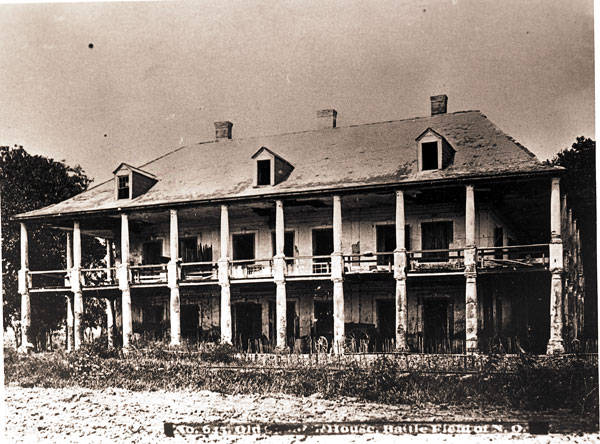
De la Ronde Plantation, Chalmette, 1866. The site where General Pakenham allegedly took his last breath during the Battle of New Orleans. Source: Wiki Commons

Continue reading “50 Historic Photos of St. Bernard Parish”

15 Historic Landmarks New Orleans Lost

A fascinating yet painful look at some of New Orleans’ iconic landmarks that did not endure the test of time.  As Benny Grunch would say, they just “ain’t dere no more.”

1. First Saint Charles Hotel

Source: http://www.old-new-orleans.com
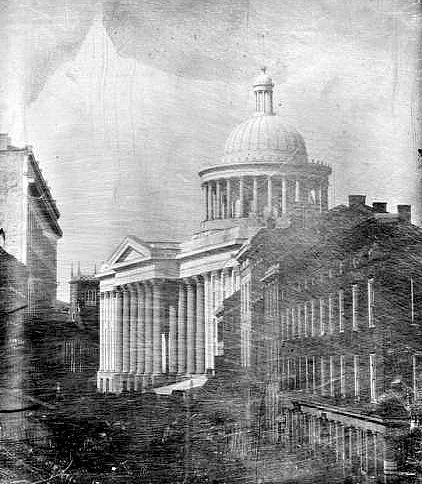
First Saint Charles Hotel, 1847 Source: http://www.old-new-orleans.com

The first Saint Charles Hotel was built in 1835. A traveling Brit called it the “finest piece of architecture in the New World.”  It met its fate in an 1851 fire that burned many other historic structures to the ground as well.  This 1847 photo is one of the only known surviving photos of the structure.

Continue reading “15 Historic Landmarks New Orleans Lost”

South Louisiana: The Almost Hippopotamus Capital of the West

As the United States entered the 20th century, increasing population and industrialization led to a nationwide meat shortage.  Moving west to acquire more land for grazing or hunting became a limited option as the frontier closed and buffalos were hunted into near extinction.  In southern Louisiana, newly invasive water hyacinths, similar to water lilies, transported to New Orleans by Japanese tourists during the 1884 World’s Fair were creating massive ecological dilemmas.  In 1910, an audacious plan was put forth to address both concerns: import hippopotamuses from Africa to the bayous of Louisiana to consume the water hyacinths and provide a tasty source of meat for a hungry nation.

Continue reading “South Louisiana: The Almost Hippopotamus Capital of the West”

The Infamous Bombing of St. Louis Cathedral

New Orleans’ St. Louis Cathedral faced a myriad of obstacles through its circa 300 years of existence.  It was first built in 1718, the same year the city was founded under French explorer and colonizer Jean-Baptiste Le Moyne de Bienville.  The Great New Orleans Fire of 1788 scorched the original structure, and a new structure was completed in 1794.  Enlargement and reconstruction in 1850 eradicated much of the original edifice, giving the city its current building.  In 1909, the Cathedral faced an uncharacteristic obstacle: nitroglycerin.

Continue reading “The Infamous Bombing of St. Louis Cathedral”

Raquette: The Lost Sport of New Orleans

“A blow across the shins with a racket is permissible, and broken heads are not uncommon.”

The Choctaw Nation of the lower Mississippi River Valley was one of the most influential yet lesser-known groups of 18th century New Orleans.  Since French involvement in the region, interactions between the groups were frequent.  Native-American and African-American relations were also common considering French and subsequent Spanish law was more lenient than English law.

Continue reading “Raquette: The Lost Sport of New Orleans”

U-166: The Nazi Submarine Sunk in Louisiana Waters

On December 11, 1941, days after the Japanese attack on Pearl Harbor, Adolf Hitler addressed the Reichstag to declare war on the United States.  Although American efforts to assist Great Britain were well underway, Hitler’s declaration officially brought the country into the European theatre.  The United States was at war on both fronts.

By early 1942, the United States had drastically increased their naval presence in the Atlantic and presented a distinctive challenge to German U-boats who previously had patrolled with little resistance. This newfound challenge coerced U-boats to find less militarized areas to patrol and harass.  The Nazis turned their attention the Gulf of Mexico.  Heavy traffic from New Orleans and the consistent flow of oil from the region made the waters a prime target.  The Gulf Coast was unprepared to defend against Nazi submarine attacks.  The Nazis felt they could significantly undermine the American war effort if they could successfully disrupt the free flow of oil.

Continue reading “U-166: The Nazi Submarine Sunk in Louisiana Waters”

Louisiana’s Fight in the Revolutionary War

Background

Despite common belief, the American Revolution was more than 13 colonies fighting an oppressive European force; it was a transatlantic conflict involving multiple countries and their colonies. Louisiana, then under the Spanish flag, waged impressive campaigns to attack British territories and undermine the British war effort.

Spain decided to assist the rebels because of their humiliating loss to Great Britain during the French and Indian War, which was the North American theater of the Seven Years War.  In 1762, Spain offered to help France in exchange for all of the Louisiana territory west of the Mississippi River, including the city of New Orleans. However, Spain surrendered East and West Florida to Great Britain.

Continue reading “Louisiana’s Fight in the Revolutionary War”

The Lost Chinatown of New Orleans

New Orleans’ once bustling Chinatown was one of the largest in the country, behind San Francisco and New York City. Due to numerous obstacles, ranging from stringent immigration policies to excessive demolition, Chinatown eventually faded from both modern maps and, for most residents, our collective memory. Tangible vestiges of this once active community are slim, yet its lore continues in New Orleans’ dynamic history.

Continue reading “The Lost Chinatown of New Orleans”

White-Passing Enslaved Kids of New Orleans (PHOTOS)

The Civil War broke out in 1861. The Union captured New Orleans in April, 1862, saving the city from the destruction faced by other Southern cities.  New Orleans remained an occupied city until the end of the war.

Continue reading “White-Passing Enslaved Kids of New Orleans (PHOTOS)”

When the Levees Blew Up: A “Public Execution” of a Community

The word levee comes from the French verb lever, “to raise”, and was first used in New Orleans shortly after its foundation.  As humanity’s battle with water continues, millions depend on them.  Nowhere is this truer than the New Orleans region, where battling nature is second nature.  Unfortunately, Louisiana levees in 1927 faced an atypical enemy; humanity.

Continue reading “When the Levees Blew Up: A “Public Execution” of a Community”

Craps: A New Orleans Creation

After the United States took control of New Orleans via the Louisiana Purchase in 1803, thousands of Americans migrated there to seek better opportunities.  Many of them moved into the emerging American sector of New Orleans as they did not mesh well with the already existing Creoles.  The Creoles looked at them as barbaric, but noticed that those from Kentucky were the most boisterous.  Creoles nicknamed them “Kaintock”, and the term eventually referred to all incoming Americans.  The resentment was mutual.  The Americans looked at the Creoles as snobbish and unwelcoming, and nicknamed them “crapaud”, meaning frog in French.  The bitter contrast between the two led to an agreement to build a canal on a major thoroughfare dividing them.  The canal was never built, but the street remained as Canal Street.  The median in the middle was dubbed the “neutral ground”, and to this day the medians in the New Orleans area are called “neutral grounds”.

Continue reading “Craps: A New Orleans Creation”

Vendetta: A Mass Lynching of Italians in New Orleans

The American Gilded Age provided economic opportunities and living wages substantially higher than Europe. The rise of industrialization meant a demand for cheap labor. New Orleans, by far the most populated southern city, was ripe with economic opportunities from hungry factories and emptying plantations. Since busy trade routes already existed from Sicily to New Orleans, Italian migration was convenient. Italians poured into the city. Increase in labor competition outraged impoverished whites and the increase in Catholicization in an already Catholic dominated city incensed white Protestants, who had been migrating into New Orleans since the Louisiana Purchase. Italians were also known for their labor organization, inevitably upsetting those who control the means of production. Italophobia was rampant in 19th century New Orleans.

Continue reading “Vendetta: A Mass Lynching of Italians in New Orleans”

A Forgotten Massacre in Southeast Louisiana

Race violence was all too common throughout American history.  As I studied the history of my own parish, St. Bernard, I started to unravel a brutal massacre absent from almost any historical narrative.  Congressional inquiries into the massacre paint an atrocity.  At the time it was dubbed the St. Bernard Riot, but it really has no official name.  What’s in a name, anyway?  The term riot was provided by whites, whether in the newspapers or remaining government records.  That term does not give it justice, and implies mass chaos must’ve ensued.  It has been recognized and used by the very few who mention it, but I choose to label it by a much more appropriate term: The St. Bernard Massacre of 1868.  It was not chaotic, but a deliberate, systematic slaughter of humans who were just liberated from their chains circa six years prior à la the Emancipation Proclamation.  In order to understand the violence, we must understand the circumstances associated with it.

Continue reading “A Forgotten Massacre in Southeast Louisiana”