Kapwa: Visiting Filipino Schools
Prior to discussing the classes I taught in Legazpi, Philippines, it’s paramount to provide context on the Filipino educational system, both from a systemic understanding and anecdotal experience. As always, this is a personal reflection that is not in any way designed to adequately capture the essence of the vast entirety of the Filipino educational system.
Background: Philippine Educational System
On our first full day in Manila, we visited the Philippine-American Educational Foundation (PAEF). One of the local Fulbright directors provided a brief background on the country’s educational system, as much as one could do in the hour she had. To be succinct, there were a few system mandates and core characteristics that I recall: universal access, global alignment (commitment to equitable, quality education), language modality (English and Filipino as primary languages), and a core philosophy that education should be learner-centered with competency-based frameworks that emphasize values and holistic development. From the onset, it seemed education in the Philippines was much more centralized than in the U.S.
After learning the theoretical framework of the Filipino educational system, the lecturer taught us that education is overseen by three main agencies: DepEd (Department of Education), which manages basic education; CHED (Commission on Higher Education), which oversees higher education; and TESDA (Technical Education and Skills Development Authority), which manages technical-vocational education and skills development. I appreciated how streamlined and organized it seemed, and wished the U.S. operated with a similar centralized approach. The basic education system consists of one year of Kindergarten, six years of elementary education (Grades 1–6), and four years of Junior High School (Grades 7–10), followed by two years of Senior High School (Grades 11–12) with various academic and technical/vocational pathways. After Senior High School, students can pursue higher education, technical-vocational training, or enter the workforce/entrepreneurship – all managed by the aforementioned trifocalized educational system. According to the lecturer, the system was designed for an ultimate output: to develop lifelong learners who are academically competent, socially responsible, globally competitive, and prepared to contribute positively to society.
The lecture highlighted several differences between the Filipino and U.S. educational systems, including larger class sizes in the Philippines, sometimes exceeding 45–50 students, different approaches to technology integration or lack of access to technology, and classroom routines such as students standing when the bell rings. Assessment practices include teacher-created assessments, exit assessments following key stages, and placement tests that can influence students’ high school trajectories, while Filipino teachers work within the Philippine Professional Standards for Teachers (PPST). Lesson planning in the Philippines was described as much more comprehensive/structured than in the U.S. The lecture also introduced the Alternative Learning System (ALS), which provides informal education opportunities for the “3 L’s:” the last, least, and lost, including incarcerated and working learners.
She concluded that effective work with Filipino teachers and students requires understanding cultural values such as malasakit (deep care for learners), may potensyal (Tagalog for “there is potential”), bayanihan (shared responsibility for educating children), and resilience. Teachers are often viewed as a pangalawang ina, or “second parent,” reflecting the high level of respect afforded to educators, while pakikipagkapwa emphasizes treating others with dignity, utang na loob reflects gratitude and reciprocity, and pakikisama emphasizes harmony, belonging, cooperation, and maintaining strong interpersonal relationships. More broadly, Filipino education is deeply connected to family and community, with teachers often aware of students’ family circumstances and schools responsive to community needs. I saw this respect and solidarity firsthand at Legazi City Science High School. The lecture also emphasized the resilience and resourcefulness of Filipino educators, who frequently adapt creatively to limited resources while maintaining flexibility, optimism, and a strong commitment to their students. Of course, it is necessary to emphasize that such descriptions are not completely standardized across the archipelago, as culture and traditions often override universality.
It was after this lecture that the PAEF paired us with a Fulbrighter from the Philippines to discuss the essential question that we had developed prior to the trip. My question: How do Filipino educators employ local history, cultural identity, and community experiences to foster civic engagement, cultural relevancy, and global competency, and how can these approaches inform social studies instruction in my own community? Our person typed up a massive response to my question, which delved into the concept of kapwa, which means “shared identity,” “fellow human being,” or “togetherness” in Tagalog. In the context of education, kapwa shifts the focus from individual success to collective learning, community, and mutual care. It means viewing classrooms not as rooms full of separate competitors, but as spaces where students and teachers share a collective identity and aim toward a common goal. I always find it fascinating that in the West, we develop terms for concepts that have existed before the United States even became a country.
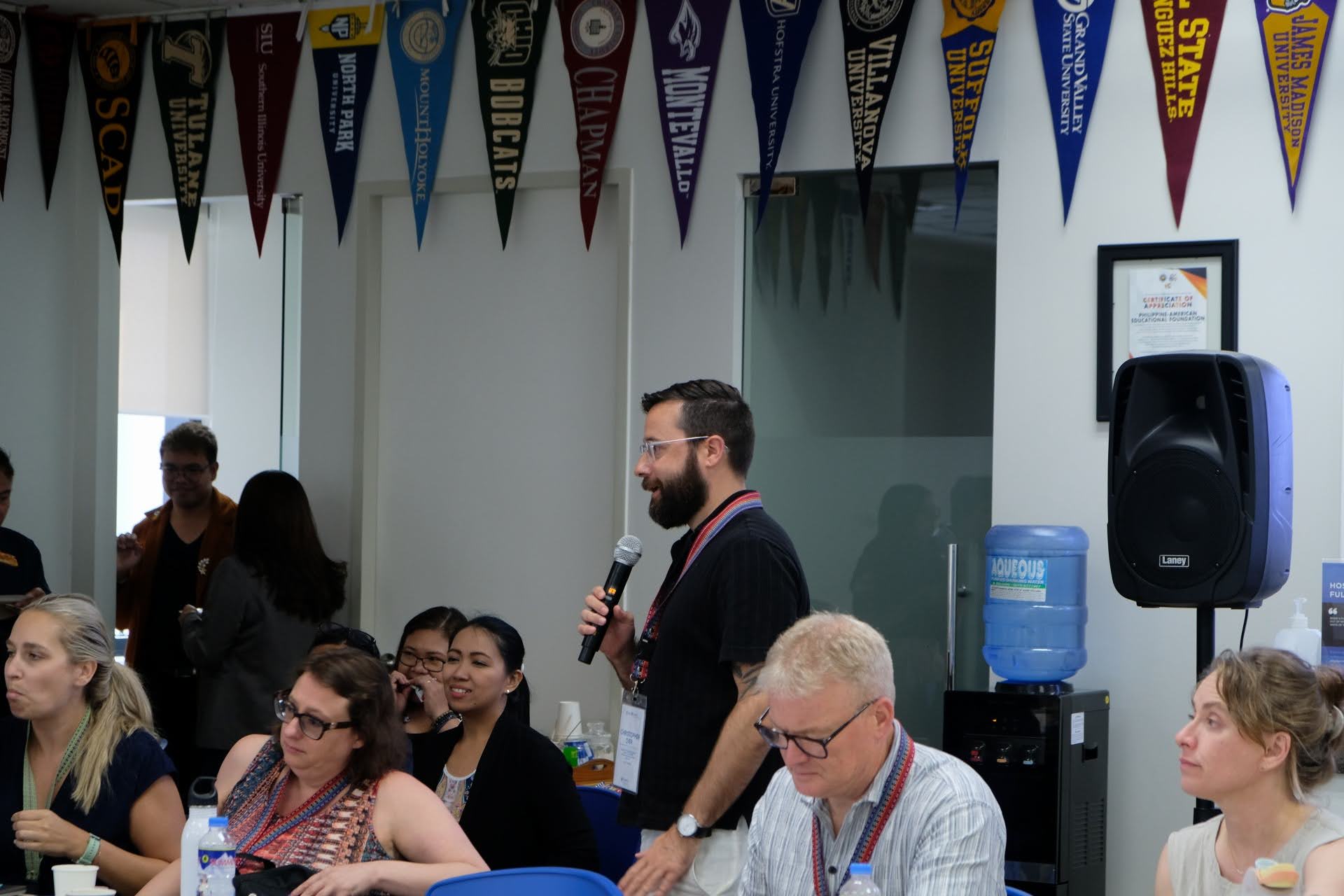
During our school visits, I saw kapwa in action. Visiting various schools was easily my favorite part of the Fulbright TGC program as I’m always fascinated with how education works in a material, on-the-ground sense in different countries. Although we visited a few schools and community institutions, I’m going to focus on the five of the main school sites that we’ve spent the most time in: Pitogo High School, Montessori de San Juan, Legazpi City Science High School, Legazpi City National High School for Inclusive Education, and Oro Site High School.
Pitogo High School
Pitogo High School in Makati City, Manila, was our first school visit. I was not expecting the roar from students upon our arrival. As we waited in the courtyard, I ignited a conversation with a couple of the boys who seemed eager to chat. We talked about basketball, and one of my opinions hyped them up.
After our brief interaction with the students, we were ushered into a faculty room to hear from school officials. It was evident that the administrators took great pride in their school as they discussed all that they were doing to succeed, including breaking test score records and showing up for their students. One aspect of their presentation that resonated with me was not just that Pitogo was a virtues-oriented school, as all schools make such claims, but the virtues themselves: “Maka-DIYOS – we value God and spirituality; MakATAO – we respect others and promote dignity; MakAKALIKASAN – we care for nature and our environment; MakABANSA – We love our country and serve with pride.”
In the meeting, pride was evident, especially that teachers are able to exercise autonomy in designing lesson plans – as long as they follow a “common framework” and collaborate with colleagues. As with many schools around the world, they emphasized how they addressed their external struggles (shootings, nutrition) by working to develop the holistic student. I asked about social studies instruction, and the administrator informed me that social studies content is standardized across the “region” (i.e., Southeast Asia).
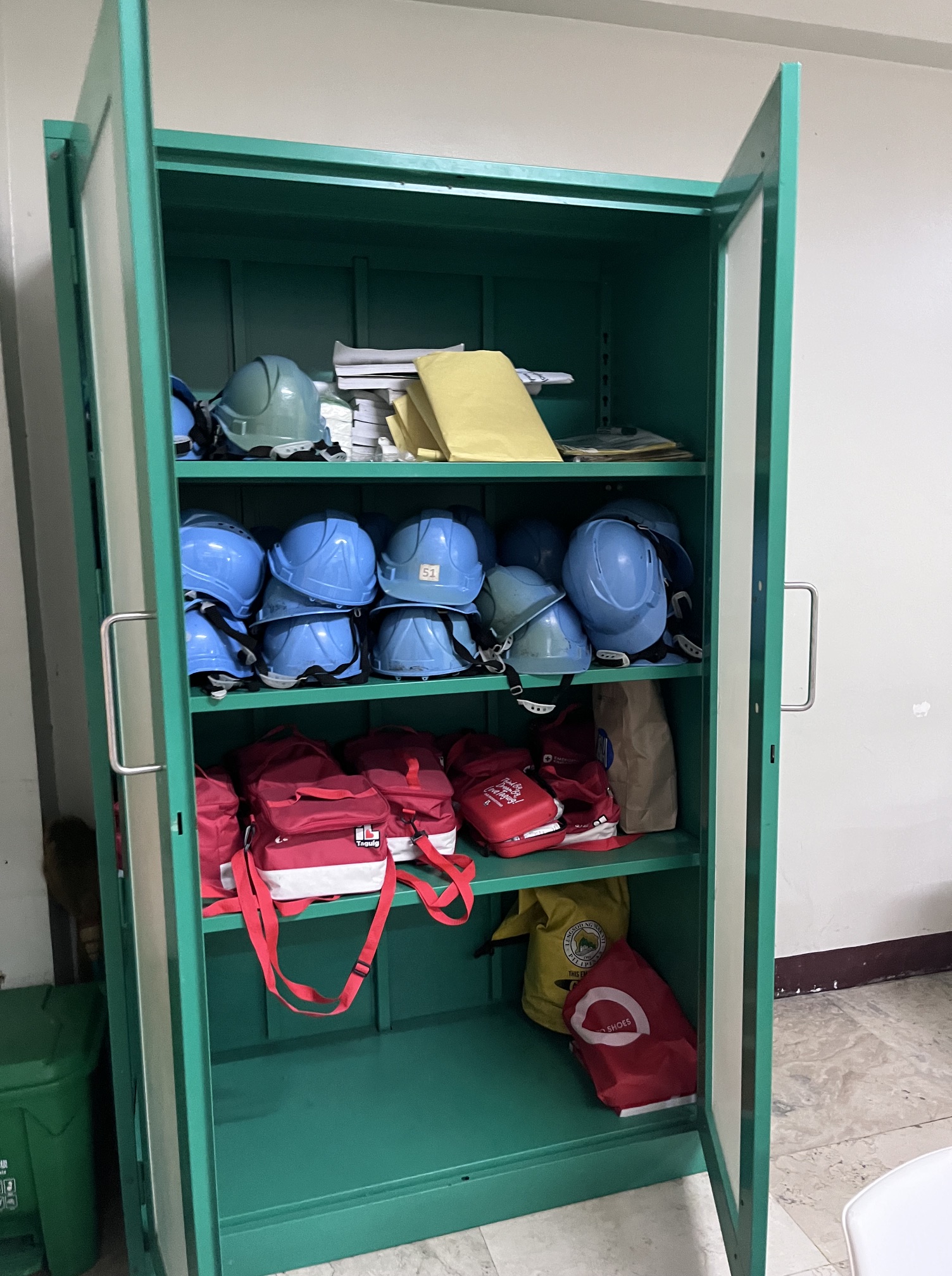
After some pedagogical dialogue with our host, a teacher took us on a tour of the school. Beautiful greenery surrounded the courtyard, which was not only aesthetically pleasing, but it also provided shade and fresh oxygen. As we passed through the outside halls, students eagerly waved and jovially cheered at our presence. It was nice to feel welcomed. It was also a reminder that Filipino students are far more animated than U.S. students. Our host ushered us into some classrooms, which had far more desks than a standard U.S. classroom, and the desks were far tinier. They showed us the inside of their closets, which were complete with hard hats in case of an earthquake. When I inquired, a teacher responded that they “nurture” their “learners with air and space competencies” (i.e., earthquakes and typhoons). As someone with a traumatic experience with disasters, I am also fascinated by how communities coexist with the looming threat of nature.
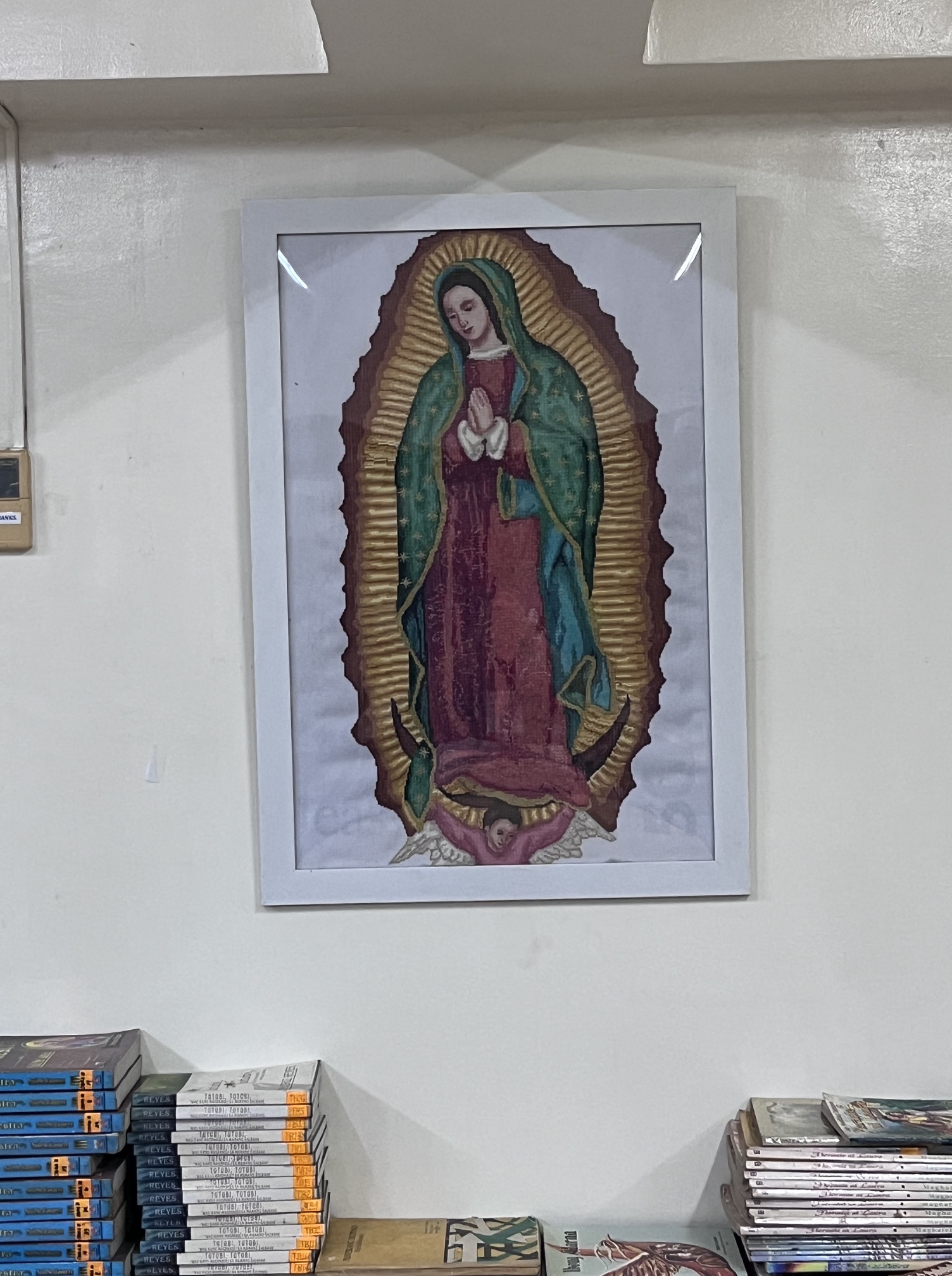
There were many aspects of the school I found interesting, but three resonated with me the most. One, there were quite a few anti-bullying signs. Moreover, some signs had QR codes for students to submit their concerns. There were also boxes for students to input slips for those without phones. I appreciated how seriously the school addressed bullying. Second, there was a basketball court atop the school roof. Incorporating sports into schooling always brings me joy. Third, there were statues and pictures of Mother Mary scattered throughout the school. This surprised me the most as a person hailing from a country with a strong, albeit declining, tradition of separation of church and state. In the Philippines, I’ve learned that Catholicism is woven throughout the state apparatus.
I spoke with John Tagala, one of the social studies teachers, before I left. He answered my inquiries with pride. When I asked about the structure of social studies content across grade levels, he responded that history at the younger ages starts locally, then progresses regionally (Southeast Asia), and finally, globally. The U.S. has the opposite structure, in which we start general and get more specific as the kids grow.
Montessori de San Juan
Montessori de San Juan, a private school in Manila, was our next school. The students here were excited but not as eager as the students from Pitigo High. At this school, we had an assembly for formalities and introductions. It was here that we had our American Fair to teach students about our particular home states. Another Fulbrighter and I represented Louisiana. Our slideshow had tidbits ranging from our cultural traditions to music. I was pleasantly surprised that students could identify Louis Armstrong and Princess Tiana – maybe the latter isn’t as surprising. We also showed them photos of our food, everything from gumbo to boiled crawfish, our wildlife, everything from alligators to endemic birds. For many, their single frame of reference for Louisiana was Popeyes chicken, which is a neat cultural ambassador to have. Because of the vast age differences and academic levels, we had to differentiate in real-time.
We distributed light-up Mardi Gras beads that I caught – mostly from the Orpheus parade. Kids accepted these beads with curiosity and sincere joy. Because basketball is prominent in Louisiana and the Philippines, I showed the kids some neat basketball tricks. Although basketball is not just a Louisiana phenomenon, it is easily one of the U.S.’ main exports. The kids enjoyed this activity the most, especially when I spun it on my finger, a move they tried to replicate. Overall, Filipino students found great joy in learning about our home states, which, in turn, brought me great joy.
Legazpi City Science High School
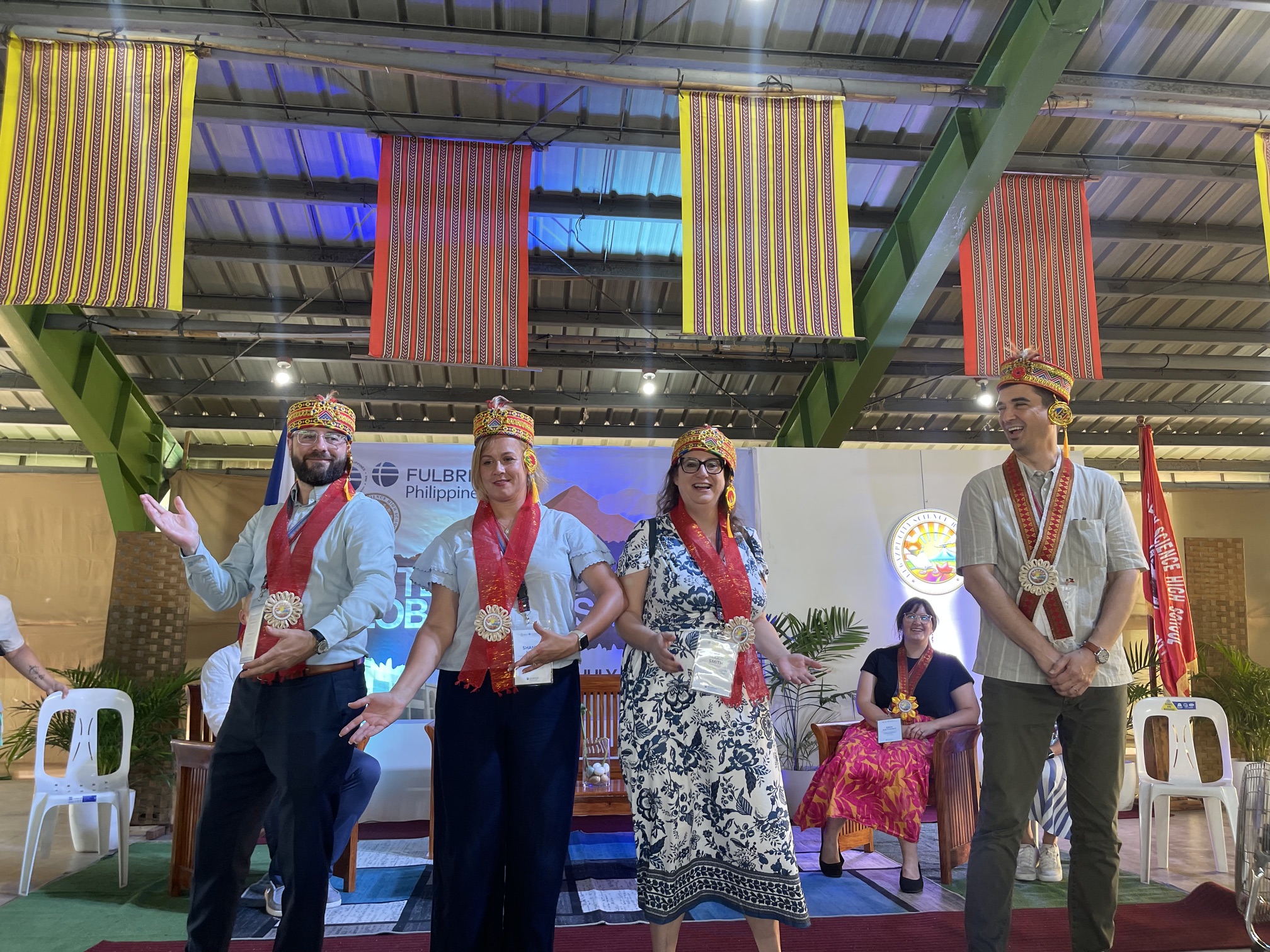
At Legazpi City Science High School – the school in which I’d eventually teach in – the day began with a “Flag Ceremony,” where students emphatically sang anthems to the country, province, city, and school. The students did so with such pride, dressing to the nines in uniforms complete with matching ties and socks. It was wholesome to witness, and it reminded me of how unpatriotic U.S. students can seem toward their own country compared to students in non-Western countries. As our gracious host, Edgar, ushered us down an aisle in the middle of the crowd, students in Indigenous garb danced alongside us, adding to what was already an incredibly welcoming atmosphere.
The students were absolutely delighted at our presence. They cheered as if we were celebrities and seemed overly grateful for our presence. To be honest, I figured this is probably the closest I’d ever come to feeling like a celebrity. The other two Fulbrighters and I were brought on stage, where our bios were read aloud, and students performed synchronized dances to welcome us. At one point, an administrator asked us to dance with them. Despite not knowing the dance or having the rhythm of the student dancers, we tried our absolute best, which was more than enough to make the entire student body erupt in cheers. I figured if a glimpse of this were to ever make its way on the internet, it may appear we were culturally appropriating. However, when folks invite you to participate in their culture, you do so, no matter how silly you may appear.
Folks took candid shots throughout the visit, and as the students were heading back to class, many of them asked to take selfies with us. It was a nice reminder that kids, despite vast global differences across cultures and ethnicities, are the same everywhere. It was a joyous, life-changing occasion.
After lunch, we had a meeting with our co-teachers and administrators to learn more about the school’s inner workings. We also met our co-teachers. My co-teacher was Teacher Honeylet, a veteran teacher with an intricate sleeve tattoo. Afterward, they gave us more gifts, including a custom-made bracelet. During this meet-and-greet, a teacher notified me that students may stare, but it is inquisitive, as I’m only the second white man to visit their school in recent years – the previous being the UK Ambassador last year, a person of only slightly more importance (kidding).
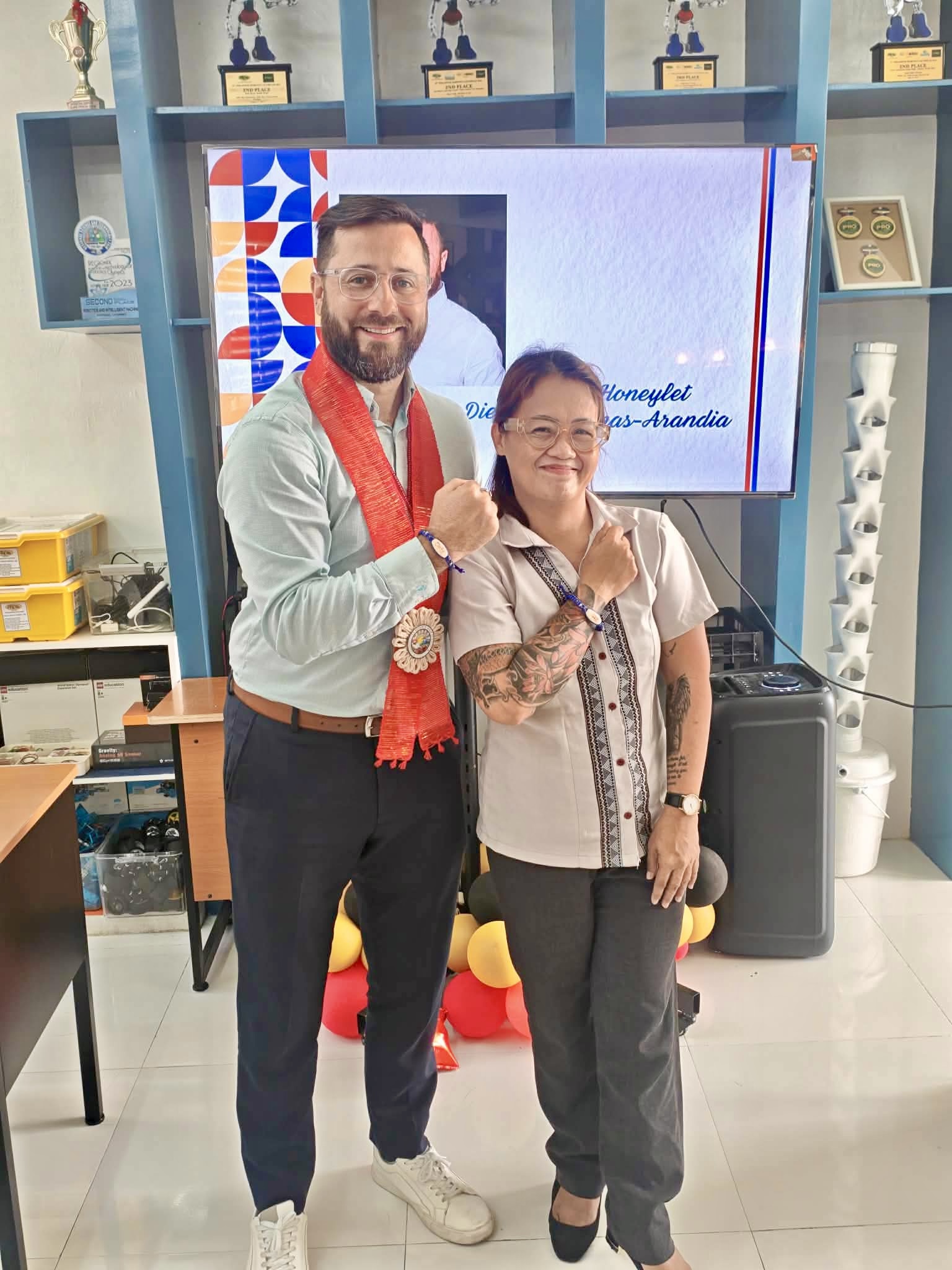
Throughout my visit, I learned quite a bit about the school. Like Ben Franklin, where I teach, students must pass an entrance exam to be accepted. All parents are required to join the Parent-Teacher Association (PTA) – even the acronyms are similar to the U.S. All parents must contribute a small portion of their salary to the PTA to assist the school, which allows the school to have more resources than any school in the region. Some classes even have AC units, which was only possible due to increasing the necessary voltage, and that was only possible through the PTA donations. Students also get to have delicious homemade snacks between classes. These similarities, despite the enormous differences in our two school systems and cultures, were another reminder that many of the fundamental things that make a school community successful – pride, parental involvement, student enthusiasm, and a commitment to providing students with opportunities – are universal.
I first observed my co-teacher, Teacher Honeylet, teach a macroeconomics course. Teacher Honeylet had a strong presence in the classroom – students listened intently. The students deeply respected her. She taught about “economic trends,” GDP, inflation, and the like, and they were incredibly responsive throughout the lesson. They also learned about the National Spending Formula and made economic comparisons between Singapore, Vietnam, and the Philippines, with lots of comparisons to Vietnam. Oddly enough, I also compared the Philippines to Vietnam as I spent almost an entire summer there before, and it was the only other Southeast Asian country I spent significant time in. The lesson included a trio activity in which groups of three students represented a macroeconomic analytical unit: the “economist,” the “household budgeter,” and the “policy synthesizer.” Teacher Honeylet asked the final question, “How do national economic indicators – like GDP, inflation, and national debt – interconnect to shape the everyday decisions of a Filipino household?”
When Teacher Honeylet spoke in Filipino, I heard plenty of Spanish words, although they were spelled slightly differently in Filipino: Ekonomiya, Teknolohiya, Edukasyon, Siyensya, Politika, Impormasyon, Bokabularyo, and Kultura. In one lesson, I even heard the word “sapatos” to reference shoes. When I prepped for my own lessons, I incorporated many of these Filipino words into the Google Slideshow. It was interesting to see how familiar so many of these words sounded to me despite being spoken in Filipino. As expected, class sizes were in the low 30s, which was dramatically low for the Philippines.
I also had the opportunity to work with a robotics class, in which students showed me their motherboards and all the inner workings – “this joystick moved this switch,” “this button made this light bulb shine,” and the like. It was fun interacting with such brilliant and passionate students. I asked plenty of questions and audibly gasped when they presented a neat gadget. They truly enjoyed teaching me, and I enjoyed learning from them. In many ways, they reminded me of my Franklin students.
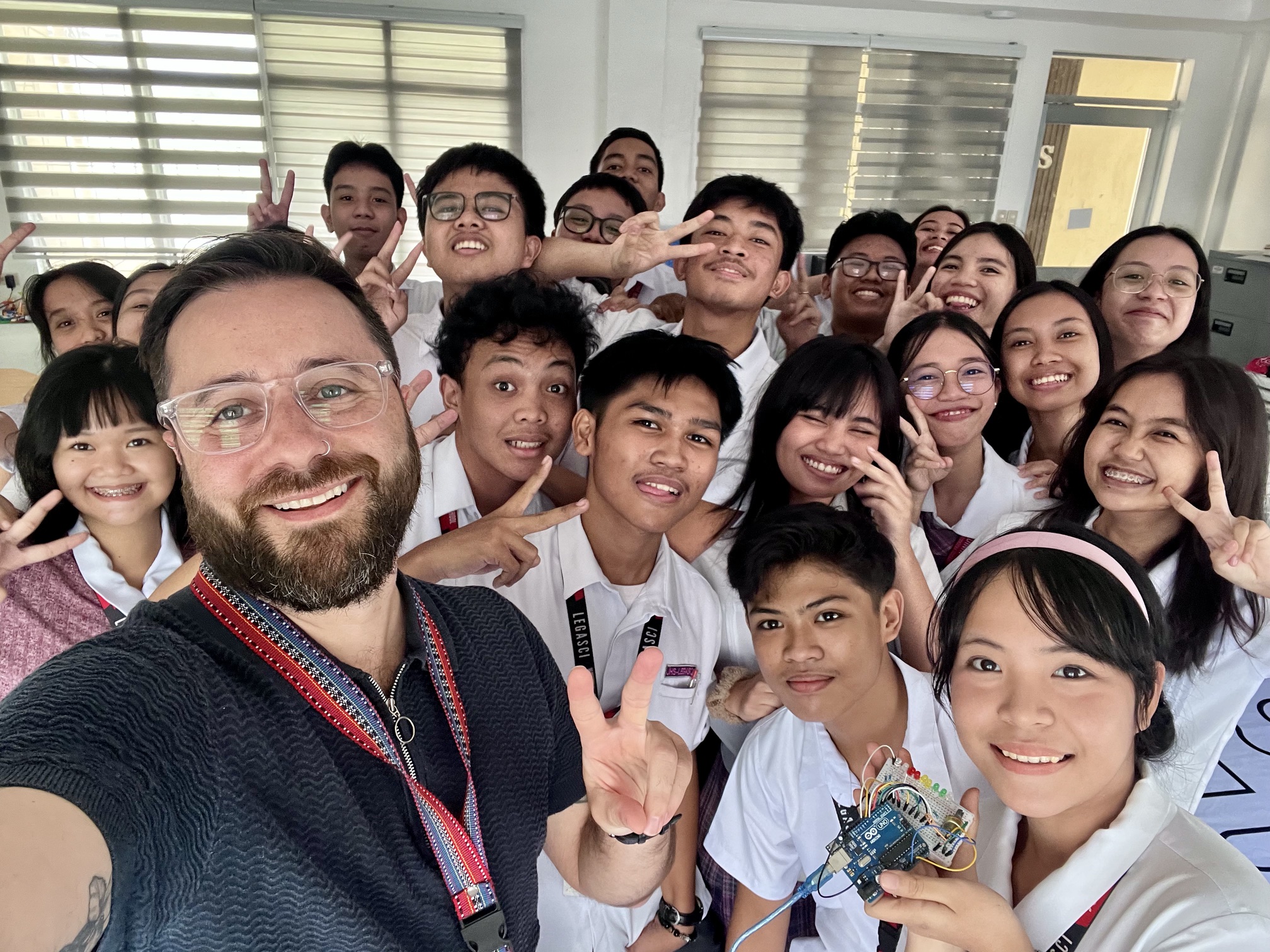
I observed another Macroeconomics class, which covered the same lesson, before moving into a lesson on globalization. Students analyzed everyday items – “sapatos” and “phones” – and examined how products were connected to different parts of the world. Phones, for example, were developed in the U.S. but manufactured in China. The lesson explored both the positive and negative undercurrents of globalization. I designed my lesson to take the baton from this one.
The group activity was called “Supply Chain Mapping.” In groups of four, students received a product image and were tasked with drawing their supply chain flowchart on ½ Manila Paper in landscape orientation. Groups created their flowcharts and then presented them to the class. Once again, students were incredibly responsive and engaged with the activity.
I also observed an 8th-grade World History class. Students were divided into groups of four to review an empire: Classical Greece, the Roman Empire, Han China, and the Gupta Empire. Each group presented its empire to the class. Afterward, Teacher Honeylet went over “key patterns” and “pillars of stability.” After observing multiple classes, it became increasingly evident that the students not only respected Teacher Honeylet but truly wanted to impress her. She had a strong presence in the classroom, but there was also a clear level of comfort and engagement between her and her students. When the kid presenting on the Roman Empire said “6-7” as he was counting, the entire class did the iconic 6-7 hand motions. Memes are universal and universally annoying.
Legazpi City National High School for Inclusive Education
We also visited Legazpi City National High School for Inclusive Education, a school dedicated to immersing students with significant disabilities into mainstream education. While this may be a concept U.S. schools are required to do, this does not seem to be the norm in the Philippines. The school welcomed us with open arms. Upon entering the office, the secretary greeted us in a variation of American Sign Language – a clear indicator that the school also hires people with hearing challenges. She appreciated the two of us trying to greet her in ASL.
The school gave us a tour to show us all the ways in which they’re incorporating students with significant disabilities into the classroom. This school lacked many of the resources available at Legazpi City Science High School, from no AC to much larger class sizes. We met multiple students whom they labeled as “mainstream learners” because they were in mainstream classrooms. In each classroom, mainstream learners stood up and introduced themselves. Interacting with these classrooms reminded me of why I enjoy schools – kids are just wholesome and kind throughout the world. When I asked whether this practice was potentially singling out students, the administrators told us that the students appreciate being recognized and that their peers celebrate them.
After a tour of the school, we sat down with administrators to learn all about the school. Turns out, they actively recruit throughout the entire area, as many people are unaware of the possibilities for kids with disabilities. Because of their efforts, Legazpi City National High School for Inclusive Education has won numerous awards, which was unsurprising. Such schools give me hope in this world.
Oro Site High School
Oro Site High School is located in the heart of Legazpi City, Albay. One of the first things they told us about the school was how frequently it flooded and how the surrounding community was often tasked with managing the dire circumstances that came with it. This immediately reminded me of New Orleans, where flooding is also a familiar part of life and where schools and communities have to learn to adapt to circumstances that are often beyond their control. There was something familiar about seeing a school navigate these challenges, even though the setting was thousands of miles away.
One of the highlights of our visit was playing Filipino games with the students. Each Fulbrighter was put on a team with Filipino students. Some of these games were indigenous to the country. The first game was a sack race, a classic outdoor game where players place both legs inside a large sack or pillowcase, pull it up to their waist, and hop toward a finish line. This was the only game that felt familiar to me because it was similar to games we played in the U.S. We then played sipa, a traditional game in which players use their feet, knees, or elbows to keep a weighted washer in the air. It reminded me a lot of hacky sack. I was rather decent with this one, as I’ve played soccer my entire life. The next game was kadang-kadang sa bao, also known as tiyakad, in which players race on stilts made from halved coconut shells and string. As clumsy as it felt walking on coconut shells, it was a fun test of balance, speed, and teamwork, and was played as a relay race. I could not find the name of the last game, but it was another relay race in which some people had to balance an object on their elbows while others had to place it between their toes. Each person on the team had to position the object differently before racing to the finish. If you dropped it, then you started all over.
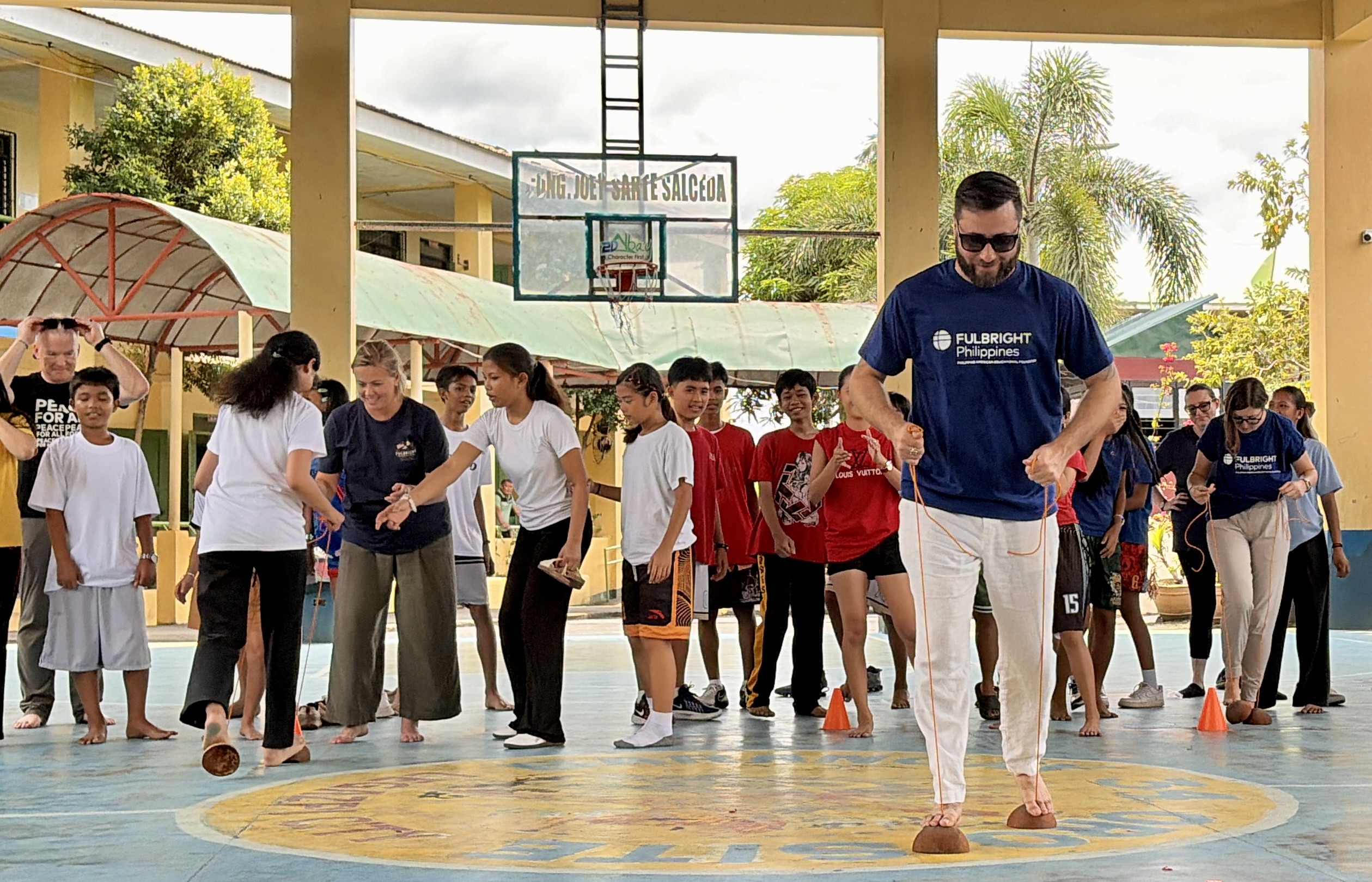
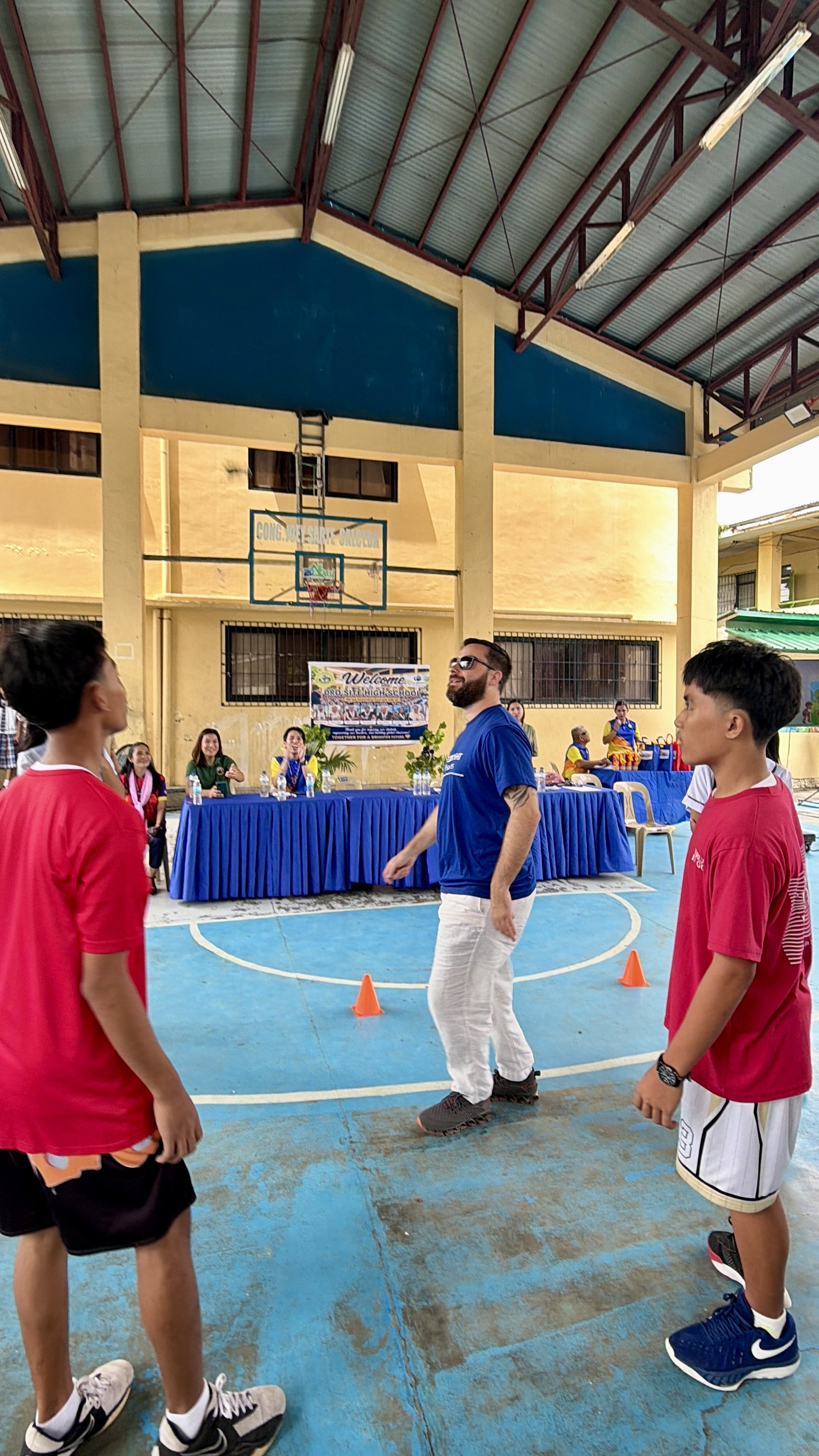
It was a fun competition, and I was proud that my team won first place – not even going to lie there. Beyond the competition itself, I enjoyed being placed alongside Filipino students because it gave us an opportunity to interact with one another in a way that did not feel like a traditional school visit. We were laughing, competing, and figuring out the games together. The kids were in leadership roles as they played these games to us, and we were the goofy, tall foreigners looking silly. It was a small but meaningful way to experience Filipino culture rather than simply observe it.
Afterward, we met with quite a few students and learned more about how their school operates. I also observed a social studies teacher give an economics lesson, and she had all 35 of those students engaged as she cleverly gamified the lesson. It was beautiful to witness students so invested in winning for their team, which was based on their gender. The competition gave the students another reason to participate, but it was clear that the teacher had intentionally created an environment where students wanted to take ownership over their learning. Watching the lesson reminded me of the power of gamification when it is used intentionally – students who might otherwise sit quietly or idly were completely invested in what was transpiring because they wanted their team to win.
We also had the opportunity to speak with the school’s Muslim students to learn more about Islam in the Filipino educational system. They were initially shy, but as we asked questions respectfully, they gradually opened up and shared more about their experiences. I appreciated that we were able to have those conversations directly with students rather than simply learning about Islam in the Philippines from a presentation. Their willingness to share, once they became comfortable, made the conversation feel much more personal and authentic. Overall, my time at Oro Site High School was a mixture of competitive fun, classroom observation, cultural exchange, and organic and fruitful conversation; it gave me another opportunity to see how Filipino schools build community despite challenges that felt surprisingly familiar to me.
Concluding Reflection
I’ve learned quite a lot from these visits, but there are a few aspects of the Filipino school culture that truly resonated with me.
First, Filipino students highly value and respect their teachers in ways I’ve never witnessed in other classrooms I’ve experienced around the world, notably in the U.S., Germany, South Africa, or Morocco. Whenever I entered a classroom, the students simultaneously stood up and said “Good morning, Sir Chris!” in unison. Students do not dare pass you without giving a respectful bow, some of which were full bows. It didn’t matter if the student was playing or eating. Sitting students quickly stood up as soon as a teacher walked in. Honeylet notified me that it’s not mandatory to return bows to students; I learned quickly why that was the case after my neck started to hurt after a few days. In classes, students stood up when speaking to the rest of the class, which U.S. students only do when prompted. Perhaps the biggest indicator of teacher respect is the fact that schools have no bells to end class. I’ve noticed that when a class that is supposed to end at 10:45 am, it is common for the lesson to spill over without any sign of frustration from the students.
Second, Filipino teachers are highly esteemed and respected by society. They have to wear a uniform similar to that of a pilot, which they are identified for their profession. One of our hosts told me that he was ignored when he went to purchase a motorcycle, so he went home to change into his teacher uniform. Upon return, the motorcycle salespeople were clamoring for his attention. These notions of respect, from students to the broader society, are not as common in the States. I’ve only found such deep value from students and families I’ve developed meaningful relationships with, and institutions that are happy to give an accolade to advance their own PR. In the States, you have to earn respect as a teacher. In the Philippines, it seems everyone respects the entire profession from the onset.
Third, Filipino teachers are proudly passionate and care deeply about their students. They talk about them with as much fervor as we do our students in the States. There are some students I’ve taught that I’ve grown to appreciate as if they were my own. I sense such sentiments from the teachers I’ve interacted with in every school I visited.
Overall, education is deeply valued in the Philippines, from the orphanages to the high-performing schools. Filipinos intrinsically embed aspects of community and culture within facets of the school. Culture drives relationships and pedagogy. There is no separation. In the States, schools seek to be fortresses against a society that refuses to address the root cause of school shootings. In the Philippines, no such concern exists. Overall, I’ve gained much from my time visiting and working with Filipino teachers and students. I am better for it, and I hope that others are better from my visit. May the lesson I’ve learned remain ingrained in my conscience, and may the connections I’ve gained be fruitful and everlasting.


1 Comment