Immediately upon arrival, it is evident that Catholicism plays an integral part in Filipino life and culture. In many ways, it felt inseparable from everyday life in the Philippines. It is all-encompassing. Taxi drivers had rosaries hanging from their rearview mirrors, schools had statues of Mother Mary everywhere, murals of Saints lined the streets, government buildings greeted you with crucifixes, and houses had Saint figurines delicately placed throughout them. Even when you weren’t actively visiting a church, religion was still present in the background of everyday life. It was not confined to Sunday mornings or the walls of a church; rather, it is intricately woven into the fabric of Filipino culture.
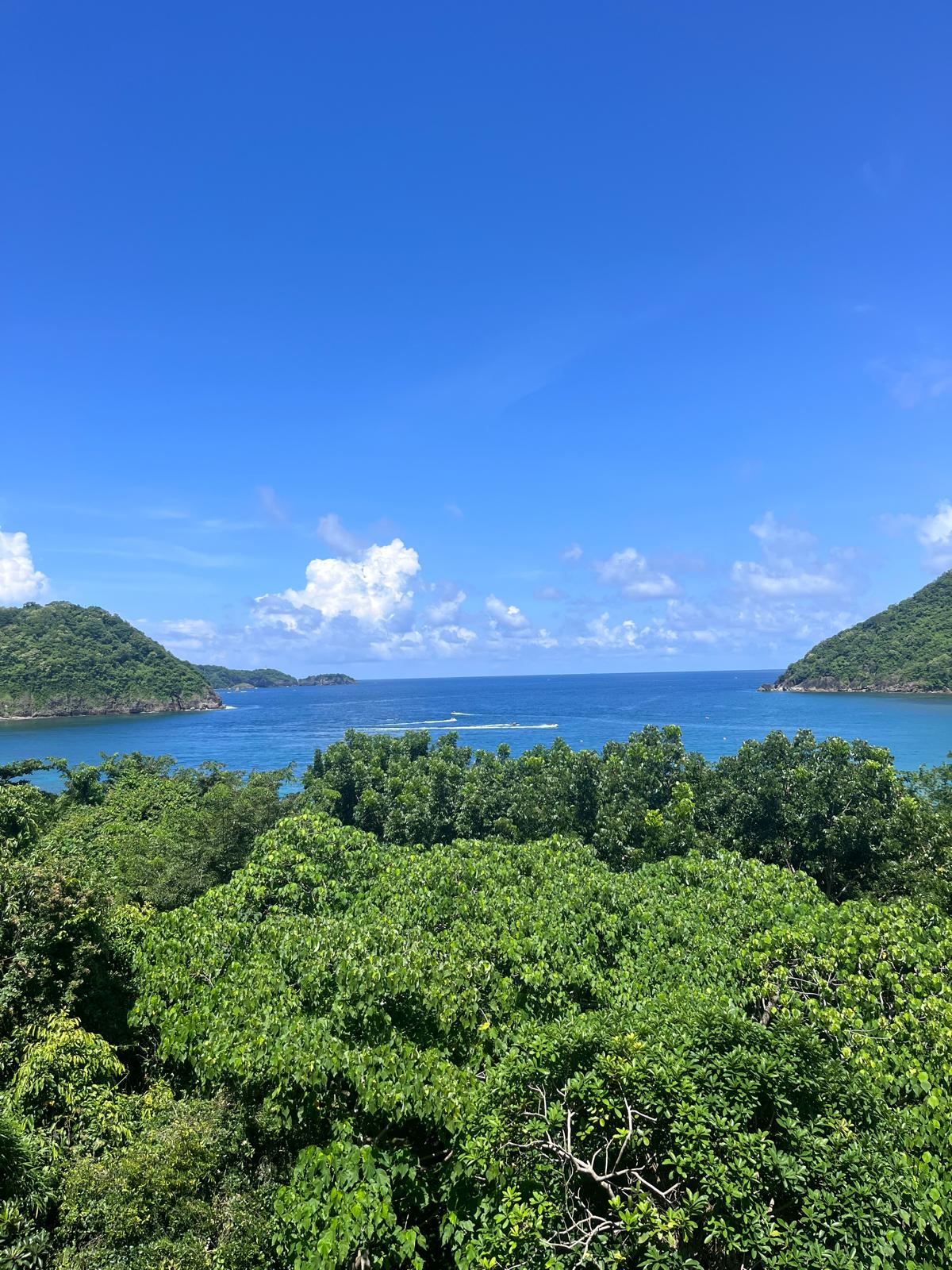
This sparked quite a few conversations among the American Fulbrighters. A spontaneous yet iconic moment of the trip occurred on the morning we checked out of the Pico Sands Resort, a coastal resort in Batangas. Since we had ample time, Siletta, a fellow Fulbrighter, invited a few of us to visit the local Catholic Church with her. St. Therese of the Child Jesus Chapel was a small rectangle surrounded by glass windows. Upon arrival, the lone worker sprayed our hands with holy water. Despite growing up a strict Catholic, this was new to me. The church was atop a hill near a cliff; the glass allowed for a beautiful view of the mountainous coastline and ocean. It’s not every day that you see a crucifix in front of such a stunning view.
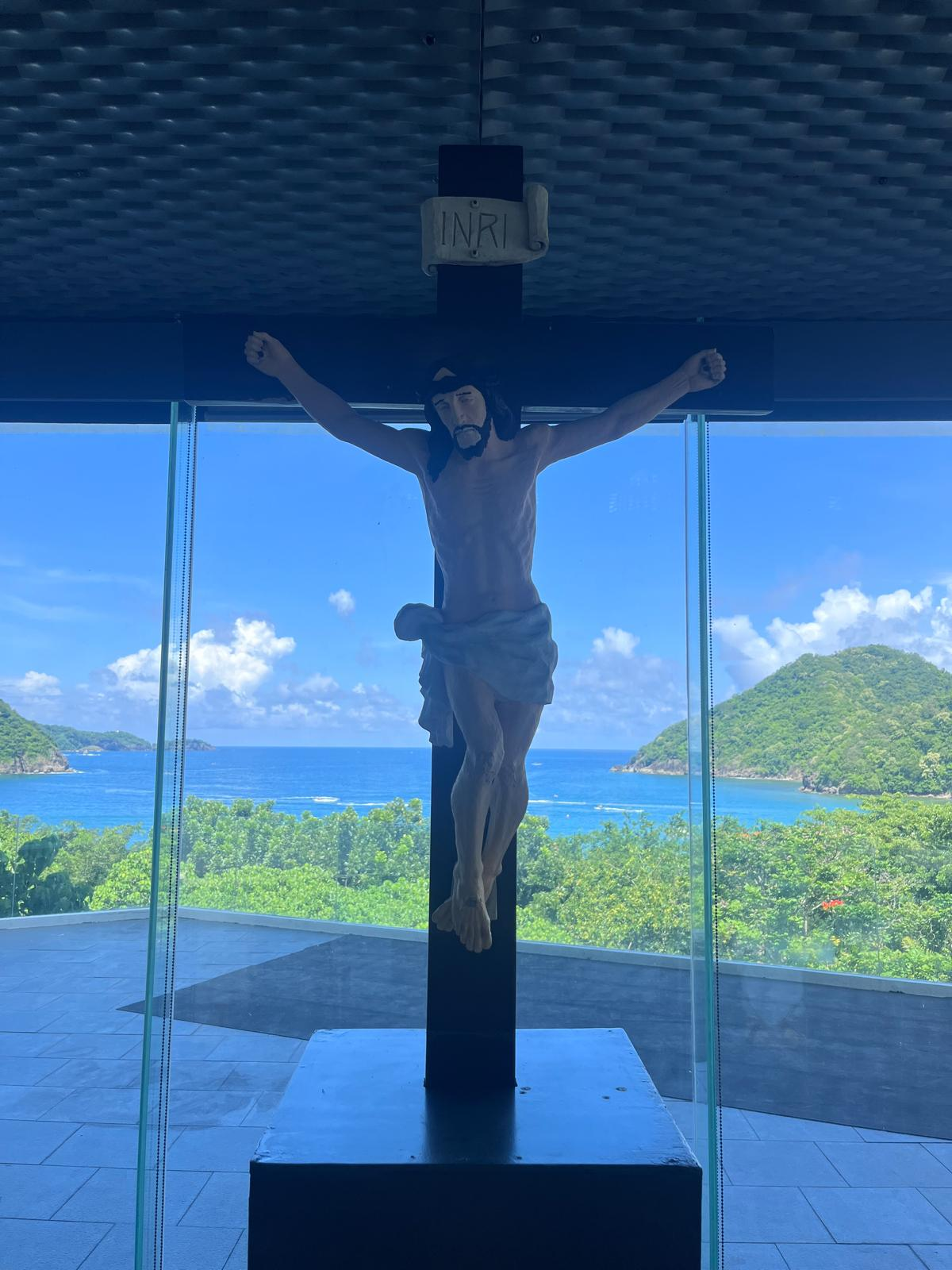
As we perused the church, a conversation regarding religion organically emerged as two of the Fulbrighters who were Muslim inquired about the objects inside the church (e.g., the Tabernacle, chalice, statues of Saints, etc). The other four of us were raised Catholic – although different types of Catholic – from vastly different places across the U.S., even the globe. We shared our knowledge and upbringings as Catholics, some of which were humorous. The two other Fulbrighters then talked with us about their experiences with Islam. It was a heartwarming exchange of cultures. This isn’t the first time I’ve experienced such conversations as I taught about Islam, visited Islamic countries, have close Muslim family friends, and the like; however, having this cultural exchange with kind folks whom I got to know decently during our travels while atop a hill in Batangas, Philippines, while overlooking epic scenery, was certainly a first. It was one of those moments I felt fortunate to have these folks as travel companions.
Since Catholicism dominated the Philippines, Catholic churches were everywhere. If I wrote about every church and chapel we visited, this blog would be endless. Instead, I’d like to focus on the three breathtaking churches that truly left me in awe:
Nuestra Señora de la Portería Church
Arguably one of the most unique churches we visited was the Nuestra Señora de la Portería Church in Daraga, Albay. The church sits atop a hill and immediately commands your attention because of both its architecture and its setting. From the elevated church grounds, you can see the imposing Mayon Volcano in the distance. Unfortunately, the volcano was hiding a bit that specific morning. The church itself is remarkably ornate, with an elaborate Baroque façade covered in carved religious imagery, twisted columns, niches containing statues of Saints, and intricate foliage designs. The façade almost feels as though it were carved rather than constructed.
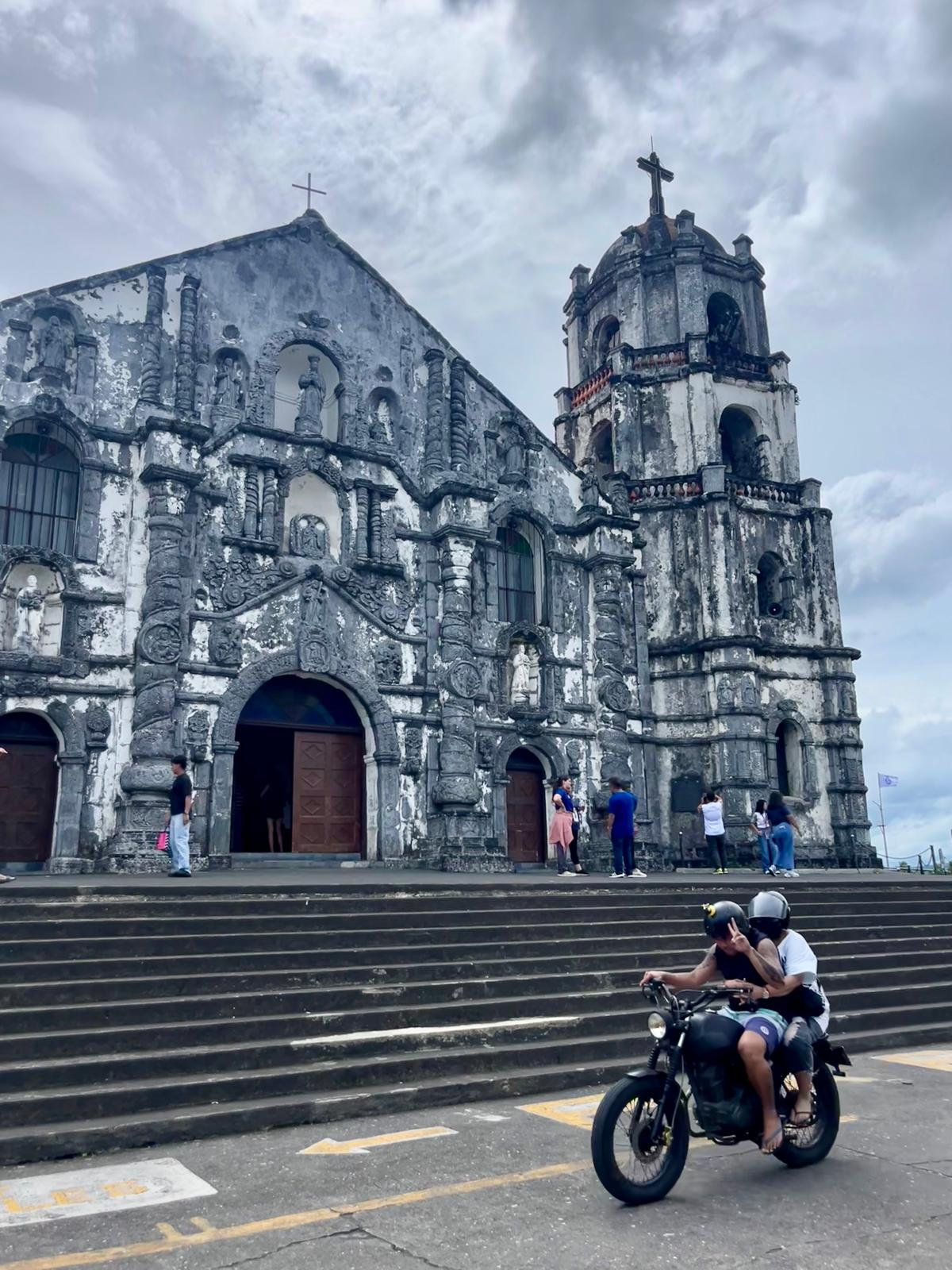
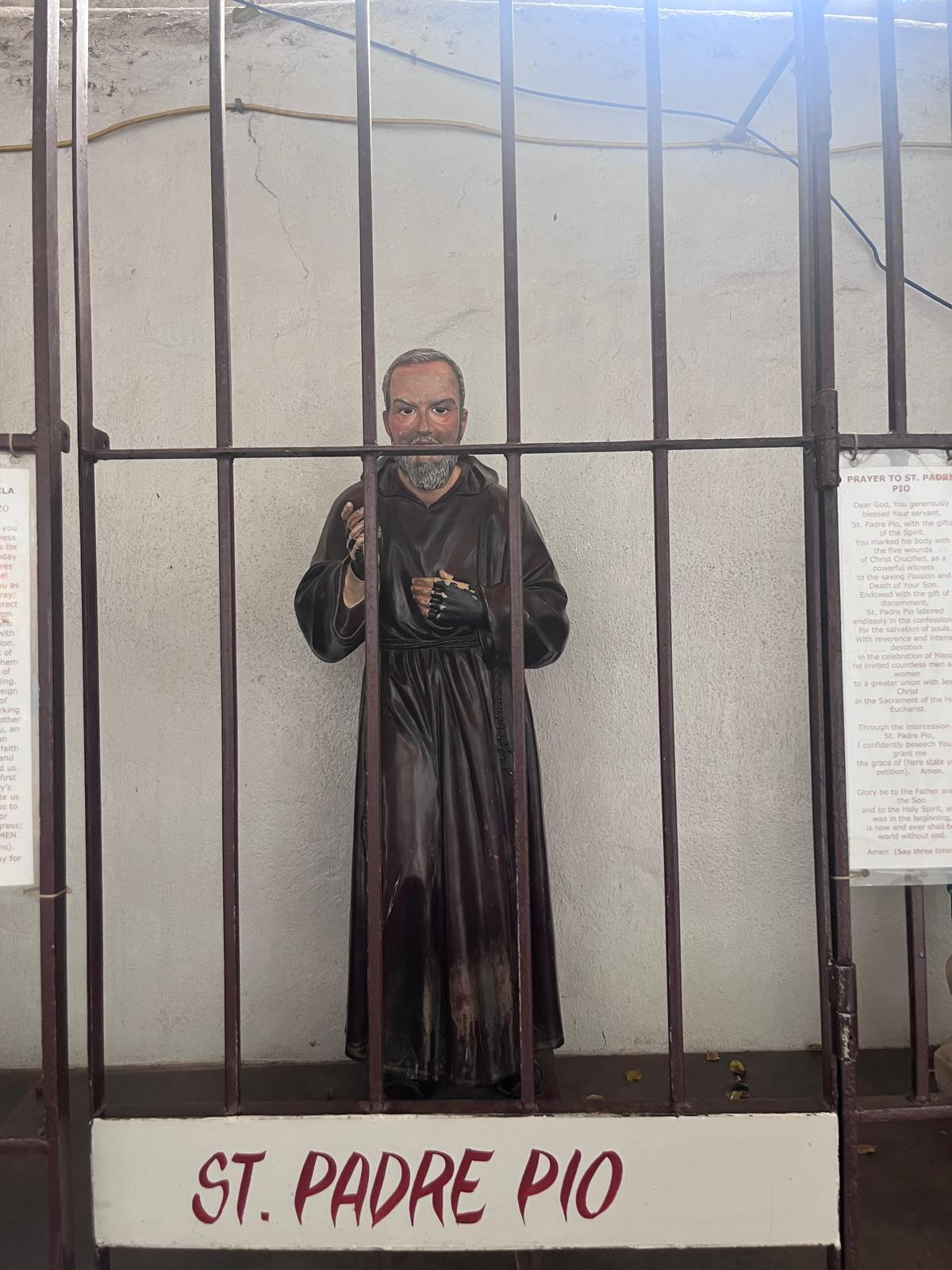
The church was built by Franciscan missionaries in 1773, after settlers moved away from Cagsawa because of concerns over the Mayon Volcano. In my opinion, the most fascinating part of the church is that it was constructed using volcanic rock from Mayon. The volcanic stone walls have survived for centuries and provide a striking contrast to the elaborate decorations carved into them. The church’s bell tower, eastern and western façades, and baptistry were declared a National Cultural Treasure in 2007; it doesn’t take an expert to see why. This church is considered so holy that the Saints figurines are locked behind iron bars, as locals swear they have healing powers. It was fascinating to stand inside a building whose very construction was tied so closely to the landscape surrounding it.
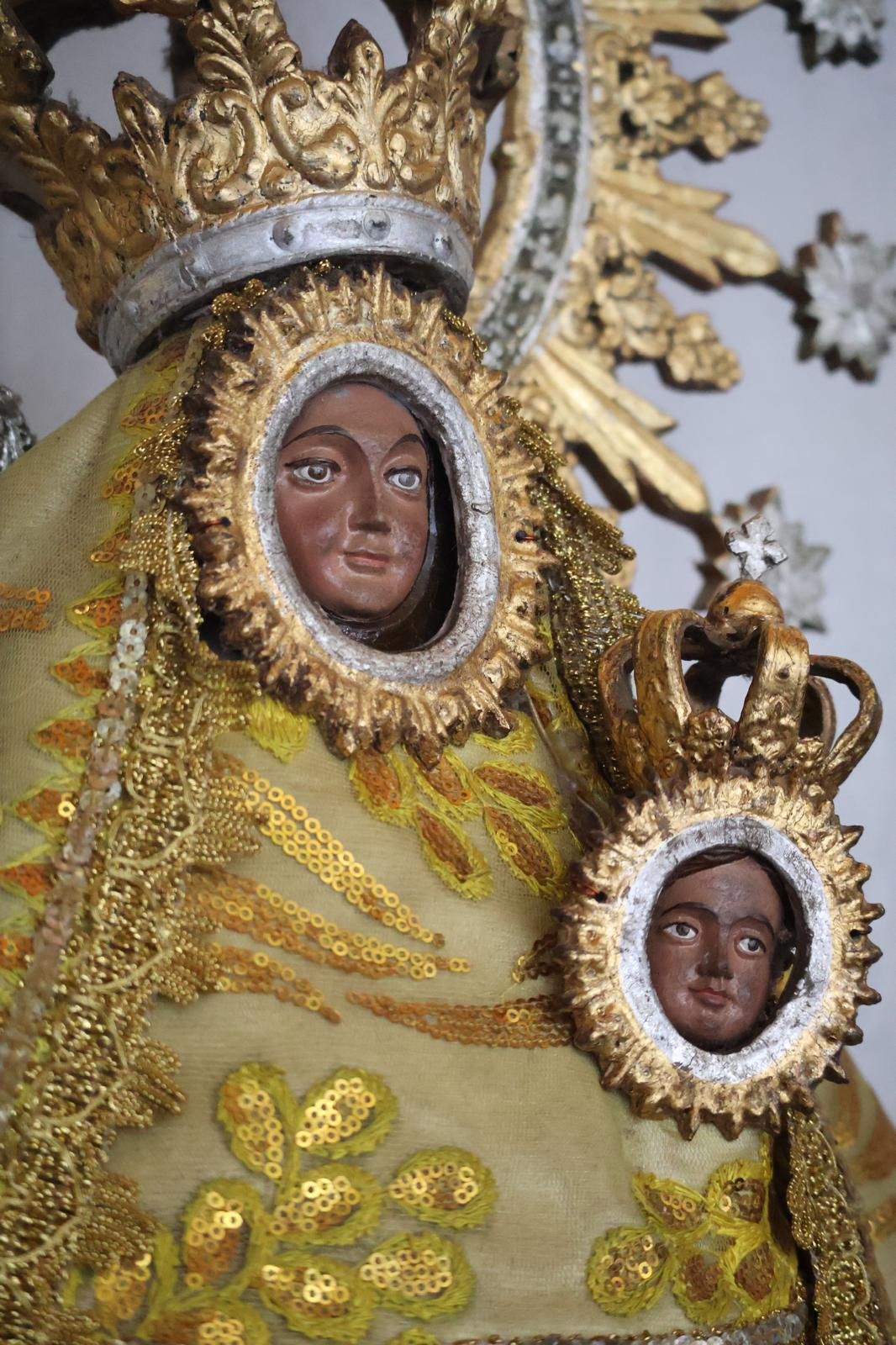
Minor Basilica of the Immaculate Conception
Another church that left an impression on me was the Manila Cathedral, formally the Minor Basilica of the Immaculate Conception. The cathedral has a long and complicated history, having been destroyed and rebuilt multiple times because of fires, earthquakes, typhoons, and war. The seventh cathedral was almost completely destroyed during the Battle of Manila in 1945, when much of Intramuros was devastated during World War II (see this blog to learn about why). The ruins of the cathedral remained for years before the decision was made to rebuild it. The present cathedral was reconstructed between 1954 and 1958 under the direction of Archbishop Rufino Santos and architect Fernando Ocampo.
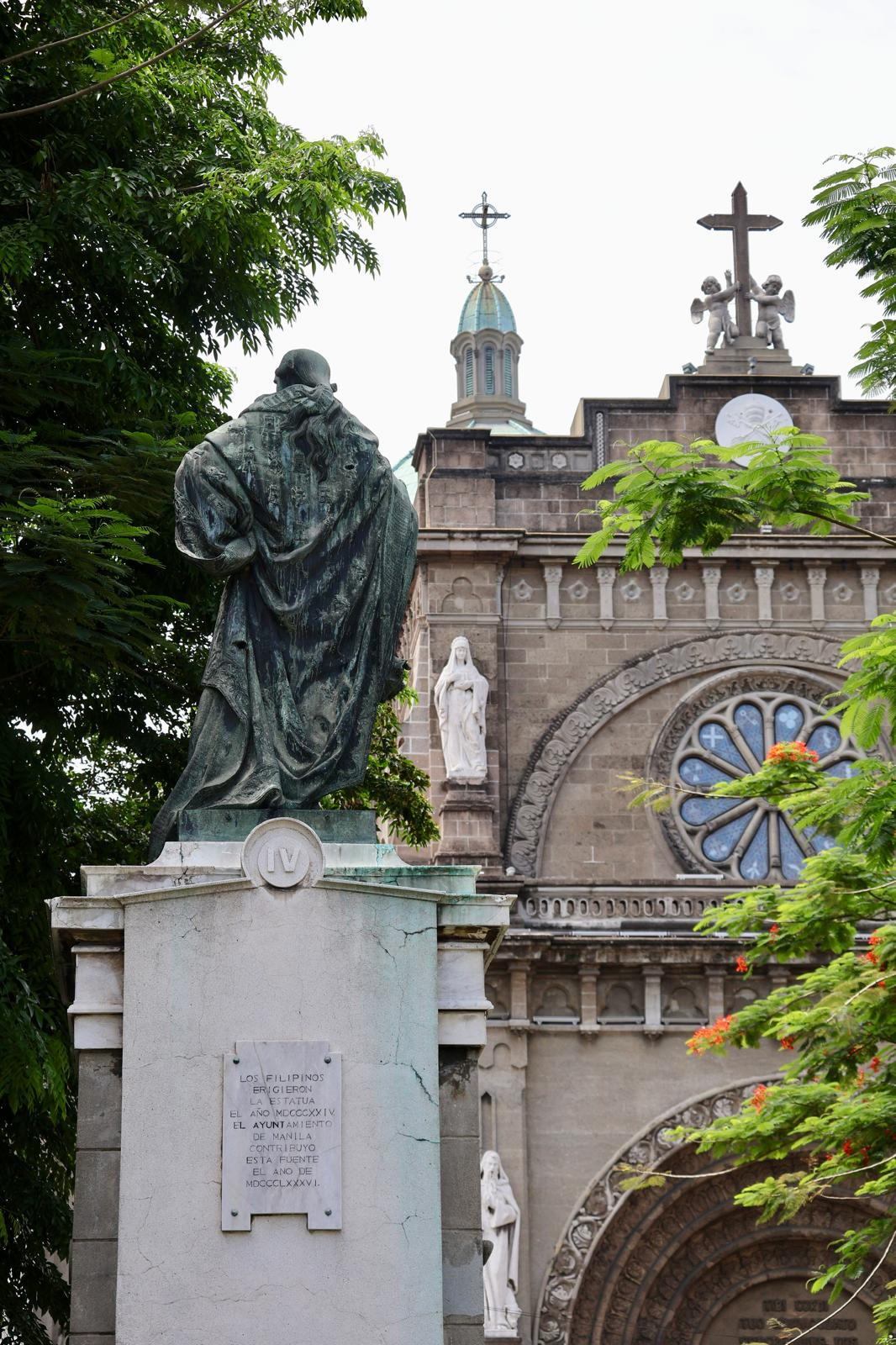
What struck me most about the Manila Cathedral was the idea that what I was looking at was, in many ways, a symbol of restoration. The cathedral survived natural disasters and bombing campaigns, yet it was consistently rebuilt and remains one of the most important Catholic churches in the country. Walking through it, knowing that so much of Intramuros had been destroyed around it, made the building feel less like simply yet another beautiful church and more like a physical representation of Filipino resilience.
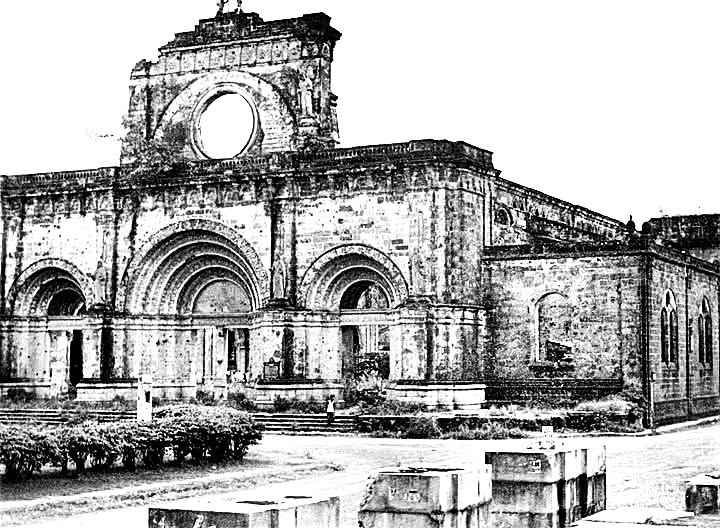
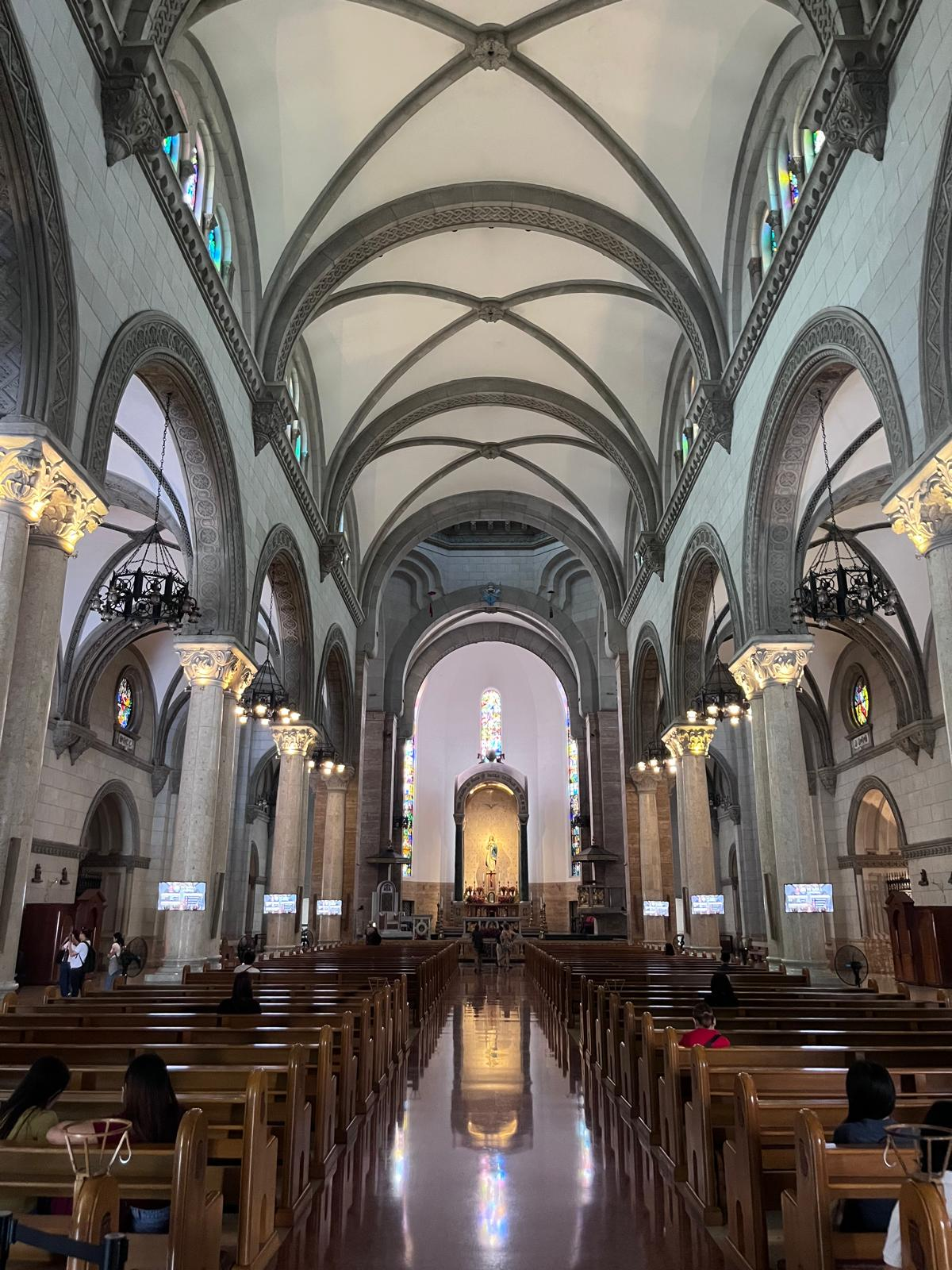
I know not how folks in Manila will receive such a perspective, but I could not help but feel that even the history of the cathedral itself mirrored the history of the country – repeatedly damaged, consistently rebuilt, and gracefully preserved.
Archdiocesan Shrine of Nuestra Señora de la Consolación y Correa
Archdiocesan Shrine of Nuestra Señora de la Consolación y Correa (San Augustin Church) was perhaps the most historically significant church we visited. Also located in Intramuros, San Agustin is the oldest stone church in the Philippines, with the present structure completed in 1607. Augustinians built the church, and it has also survived centuries of earthquakes, wars, political changes, and the destruction of much of Intramuros during WWII. In fact, San Agustin was the only church in Intramuros to survive the Battle of Manila relatively intact.
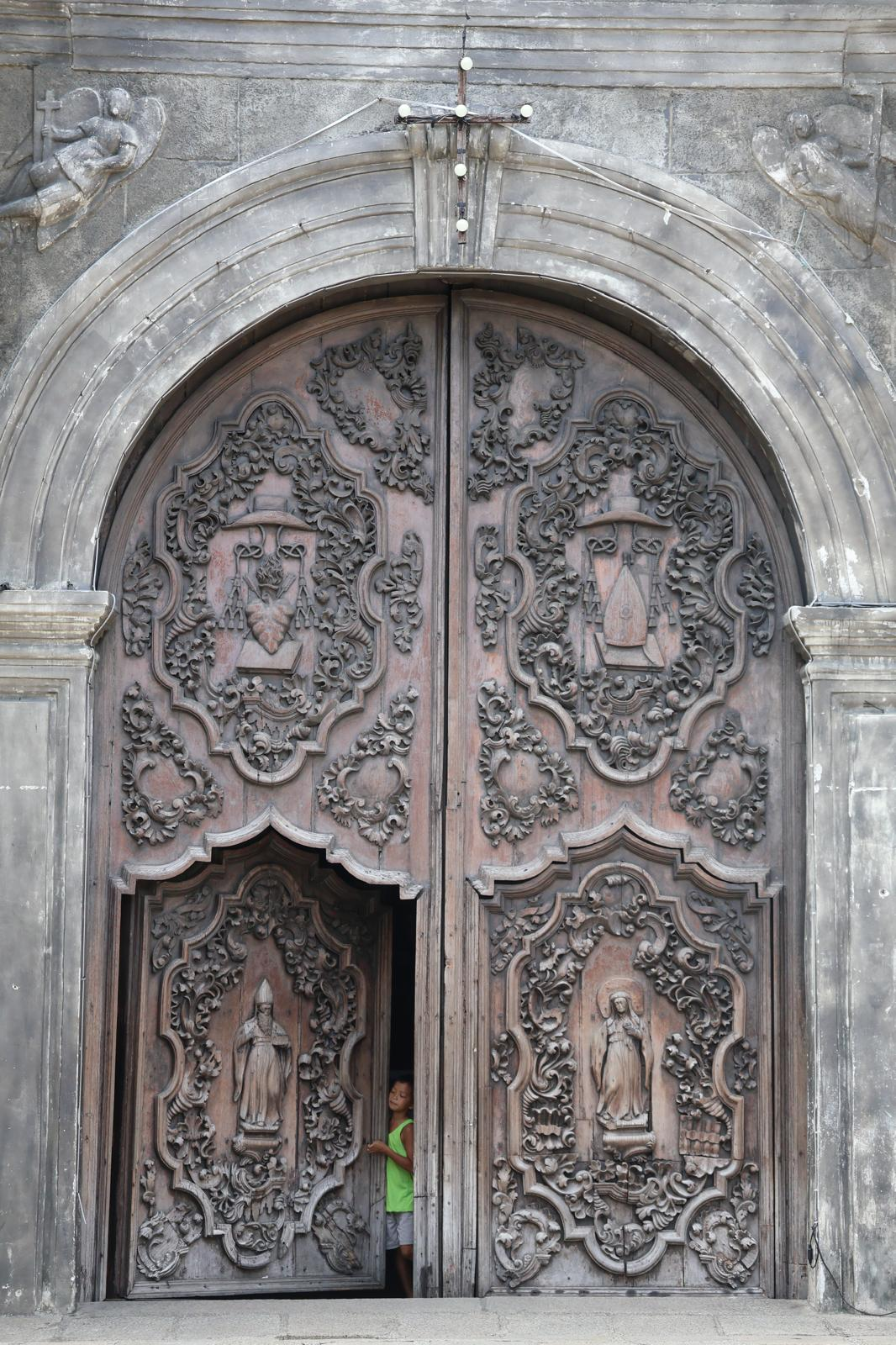
Its age alone was enough to leave me in awe. I stood outside the church for quite some time, marveling at the fact that this is a church that has been standing since the early 1600s. It is made from locally quarried adobe stone and lime mortar, and its thick walls and distinctive architecture helped it withstand the numerous earthquakes that destroyed other structures throughout Manila. The church is also filled with history beyond its walls; the ashes of Spanish conquistador Miguel López de Legazpi are buried inside, and the church has been the site of numerous important events in Philippine history. It was also designated as one of the four Baroque Churches of the Philippines on the UNESCO World Heritage List in 1993. Unfortunately, we were not allowed to take photos inside the church. Maybe this church – standing strong in the face of endless adversity – better represents the Filipino spirit.
Nuestra Señora de Salvación
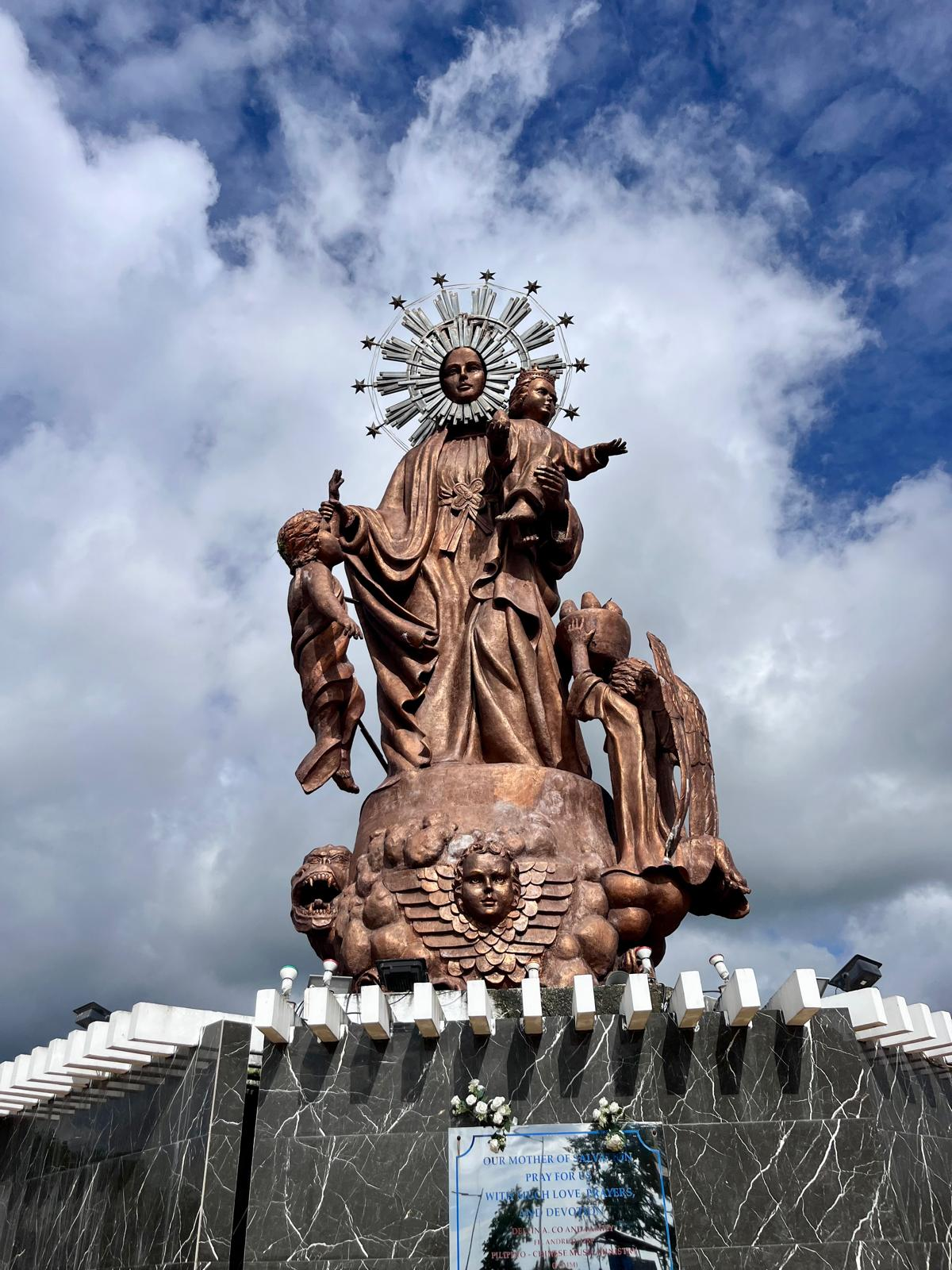
On our last day in Albay, we stopped by the Our Lady of Salvation statue. Nuestra Señora de Salvación is the heavenly patroness of the province of Albay and the Diocese of Legazpi. The enormous statue stands overlooking the landscape, making it difficult to miss as you travel through the area. Seeing the statue was another reminder of just how deeply Catholicism is woven into the identity of the Philippines. Religious iconography was not simply confined to churches; they were often placed prominently throughout communities, serving as visible reminders of faith in everyday life. Standing beneath Nuestra Señora de Salvación on our final day in Albay felt like an appropriate way to close out our time in a province where faith was paramount.
Islam in the Philippines
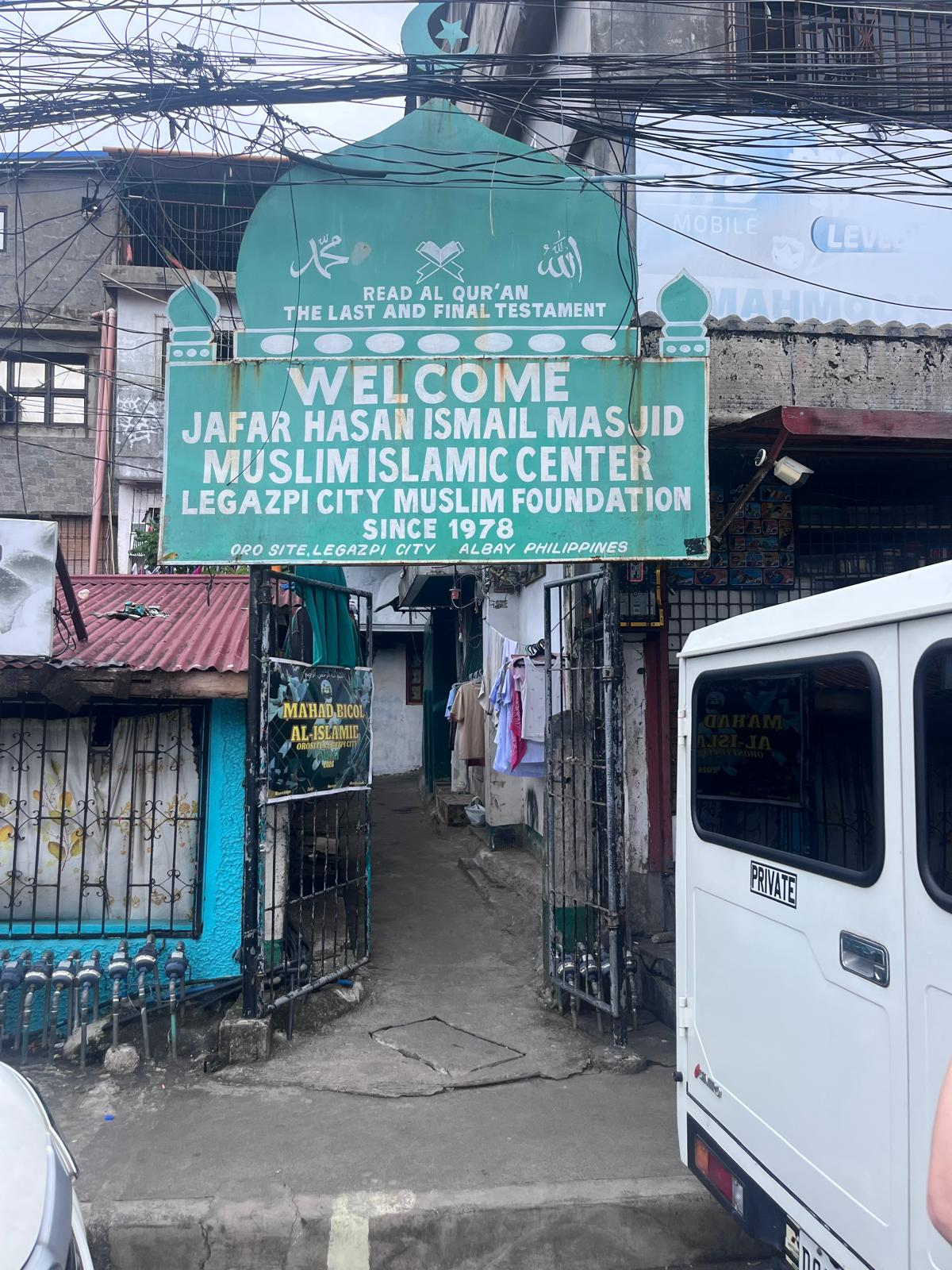
Edgar, who was our main host in Legazpi, and the other hosts felt it was important for us to experience Islam in the Philippines.
We entered into a small madrassah, a school focused on Islamic religion and learning, in Legazpi, around the corner from Oro Site High School. Arabic was written across the boards, immediately signaling that we had entered a very different educational and religious environment from the Catholic schools and churches we had visited throughout our time in the Philippines. One of the Filipino guides asked me to translate the Arabic for him, and was shocked when I told him I could not read Arabic. I often think my beard gives people the wrong impression. We sat with the Imam, who spoke heavily about peace and how the true goal of Islam is to find that peace. I wondered if he spoke so heavily about peace because he presumed Americans are misinformed about Islam. I appreciated this visit, as it spoke to the religious diversity of the country and provided another perspective on a religion that is often misunderstood in the US.
When people often think of the Philippines, they usually don’t think of Islam, despite Islam predating the arrival of Christianity. Islam had already reached parts of the southern Philippines centuries before Ferdinand Magellan arrived in 1521. Muslim traders and missionaries helped spread Islam throughout parts of the archipelago, particularly in Mindanao and the Sulu Archipelago. Over time, powerful Muslim sultanates emerged, including the Sultanate of Sulu and the Sultanate of Maguindanao. These communities developed their own political systems, cultures, traditions, and networks of trade – much of which can still be seen today. The arrival of the Spanish and the subsequent spread of Christianity dramatically altered the religious and political landscape of the Philippines, but Islam remained deeply rooted in the southern Philippines and continues to play an important role in Filipino history and culture. The Philippines’ 2020 census counted nearly 7 million people identifying with Islam – about 3 million more than in the US (depending on how Muslim populations are estimated), making it the country’s second-largest religious affiliation after Roman Catholicism.
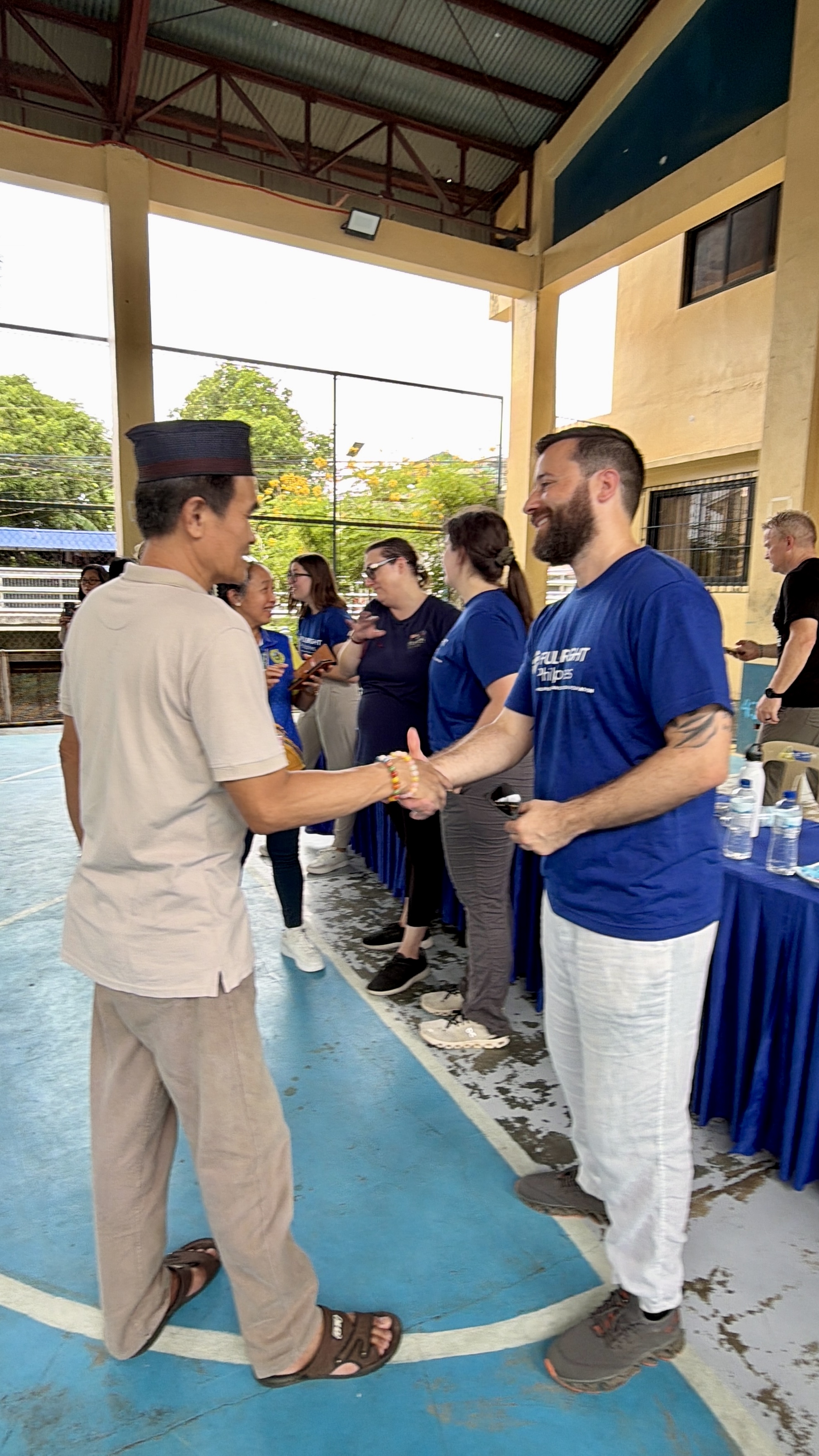
Speaking to Muslim students, sharing meals with the Imam, and visiting the madrassah were crucial as they challenged the assumptions that can easily develop when we think about the Philippines solely through the lens of Catholicism. Catholicism is undeniably a dominant part of Filipino culture, but it is not the only religious story. Islam has its own long and deeply rooted history in the country, one that actually predates Christianity’s arrival. Sitting in that madrassah and listening to the Imam speak about peace was a reminder that the Philippines is much more religiously diverse than outsiders, myself included, may initially realize.
Ultimately, what I respected most about the Filipino people was the reverence and devotion they had for their religion. Faith seemed to be everywhere. It wasn’t simply something Filipinos practiced; it was something that was visibly woven into their culture, history, families, schools, and communities. As someone who grew up Catholic myself, there was something particularly meaningful about seeing that level of devotion in another part of the world. At the same time, experiencing Islam alongside Filipino Muslims reminded me that religious faith takes many different forms here. I left the Philippines with an even greater appreciation for the way Filipinos have preserved, practiced, and passed down their faith – and for the role that religion continues to play in shaping the identity of the country. It’s not a passive aspect of identity; it is one that is also lived in their interactions.


